
Beginner Flute Technique: Tone, Breathing, and First Notes

Why Does Beginner Flute Technique Matter?
What Should Beginners Understand About the Flute and Its Sound?
How Do Beginners Develop Flute Tone and Breathing Control?
Beginner Techniques Every Flute Student Should Know
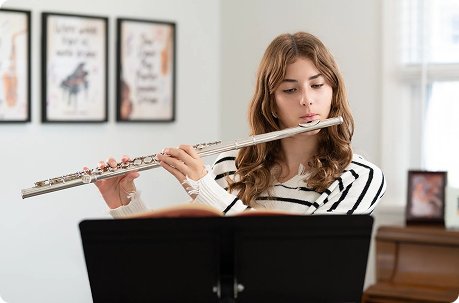
Essential beginner skills include:
Embouchure development: Shaping the lips correctly to produce a steady and consistent tone.
Finger coordination: Learning accurate finger placement and smooth transitions between notes.
Posture and balance: Maintaining proper alignment to improve airflow, comfort, and control.
Reading sheet music: Understanding rhythm, pitch, notation, and basic musical markings.
As students grow, instructors introduce scales, simple melodies, and rhythm exercises to build confidence. These practical skills make practice enjoyable while helping students understand how technique turns into real music.
How Do Beginners Learn to Read Music with Confidence?
How Do First Songs Help Beginners Build Technique?
How Do Group Playing and Performance Support Beginner Growth?
Why Are Patience and Mindfulness Important in Flute Learning?
Start learning today with 50% off your first lesson on the instrument of your choice!

How Do Instructors Guide Beginner Flute Growth?
Building Confidence Through Consistent Practice
Start Your Flute Journey with West Island Music Academy
Frequently Asked Questions
1. What is beginner flute technique?
2. Why is breathing important when learning flute?
3. What is embouchure in flute playing?
4. What first notes do beginner flute students learn?
Beginner flute students usually start with simple notes that are easy to finger and control. These first notes help students practise tone, breath support, rhythm, and smooth transitions.
5. Why is posture important for beginner flute students?
Posture helps students hold the flute comfortably, breathe more freely, and reduce tension. Good posture supports better tone, control, and long-term progress.
6. How does reading music help flute beginners?
Reading music helps beginners understand notes, rhythm, rests, and dynamics. It gives students the independence to learn new melodies and practise with more confidence.
7. How often should beginners practise flute?
Beginners improve best with short, regular practice sessions. Even a few focused minutes each day can strengthen tone, breathing, finger movement, and music reading.
8. How long does it take to build beginner flute technique?
Beginner technique develops gradually. Students may notice early progress within weeks, while stronger tone, breath control, and confident playing usually develop over several months of consistent practice.