
Can You Really Learn Guitar from Home? What Actually Works
Learning guitar from home can work very well when the process includes structure, feedback, consistency, and clear practice goals. Many learners wonder whether home-based guitar learning can create real progress, especially without always being in a studio environment. The answer depends on how the learning is organized. Random tutorials and unfocused practice often lead to slow progress, but guided routines, live feedback, useful tools, and personalized goals can help students improve steadily. Whether someone is a beginner learning first chords or an experienced player refining technique, learning from home can support strong musical growth. With the right approach, home guitar learning becomes flexible, effective, and motivating.

What Actually Helps Students Learn Guitar Faster from Home?
Why Can Learning Guitar from Home Work So Well?
Learning guitar from home works well when technology, real-time feedback, and structured practice help students correct mistakes and stay consistent. Home guitar learning has become more effective because modern tools allow students to receive demonstrations, feedback, progress tracking, and practice support without leaving home. Through video, recordings, play-along tools, and review materials, learners can observe technique, correct posture, and improve timing more clearly.
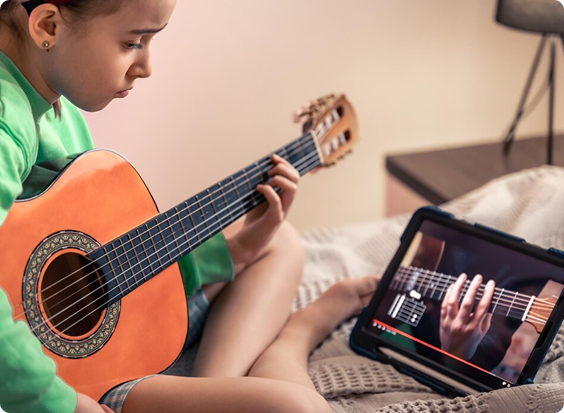
Students Experience Important Benefits Such As:
One-on-one guidance
Progress tracking
Personalized song choices
Technique development
Instant feedback
Encouragement and accountability
How Do Online Guitar Lessons Work at WIMA?
Home-based guitar learning works through live practice, review, new material, guided playing, feedback, and weekly practice goals. A strong home guitar learning routine follows a clear structure that keeps progress organized. Each session should begin with a review of previous work, especially exercises or songs that need correction. After that, learners can move into new material such as chords, scales, riffs, theory, or technique based on their goals. Guided playing helps students apply what they learn in real time, while feedback helps correct mistakes before they become habits. The session should end with a practice plan that gives direction for the week. This structure helps learners stay motivated and prevents home practice from becoming random or confusing.
A Strong Home Learning Session May Include:
- Warm-up & Review: Correct previous exercises and build consistent technique.
- New Material: Introduce chords, scales, riffs, theory, or songs based on goals.
- Guided Playing: Practice songs, rhythm patterns, and exercises with direction.
- Feedback & Recommendations: Correct mistakes and avoid bad habits.
Practice Plan: Follow weekly exercises tailored to current needs.
What Setup Is Needed to Learn Guitar from Home?
A simple home guitar setup needs an instrument, a device with a camera, stable internet, a tuner, and a quiet practice space. Learning guitar from home does not require a complicated setup. A learner can begin with a basic acoustic or electric guitar, a phone, tablet, or computer, and a quiet place to practice. A stable internet connection helps if live guidance or digital resources are being used. A tuner is important for keeping the instrument sounding correct, while a comfortable practice corner helps reduce distractions. Optional tools such as headphones, a metronome app, music stand, or small amplifier can improve the experience. The goal is not to create a professional studio, but to build a simple and reliable space where practice can happen consistently.
Basic Setup Needed:
A guitar (acoustic or electric)
A computer, tablet, or phone with a camera
Stable internet connection
A tuner (clip-on or app-based)
A quiet corner to practice
Headphones
A metronome app
A music stand
A small amp for electric players
Why WIMA Is the Best Place for Online Guitar Lessons
Professional Teachers with Real Musical Expertise
WIMA’s guitar instructors are trained musicians who bring years of performance and teaching experience. They specialize in multiple genres, ensuring that whether you love rock, jazz, metal, classical, folk, or pop, your teacher can guide you with mastery. Their teaching approach blends technique, creativity, and musical expression to build strong, confident guitarists.
A Learning Path That Keeps You Motivated
Online + in-person lesson options
Feedback that accelerates improvement
Repertoire customized to their taste
A structured sense of progress
Goal-setting for long-term success
Start learning today with 50% off your first lesson on the instrument of your choice!
How Does Learning from Home Help Students Improve Faster?
Real-Time Correction Prevents Bad Habits
Feedback helps learners correct form, picking motion, fretting pressure, rhythm, and posture early. Without correction, small mistakes can become long-term habits that slow progress. Proper review helps students play more cleanly and confidently from the beginning.
A Structured Plan Gives Direction
A clear plan helps learners know what to practice and how each skill connects to the next. Goals may include rhythm guitar, fingerstyle, improvisation, theory, songwriting, or audition preparation. Step-by-step direction keeps home learning focused and manageable.
Playing Music Students Love Increases Motivation
Favorite songs make practice more enjoyable and easier to repeat. Whether the music is classic rock, acoustic pop, blues, or current trends, song-based learning connects technique to real musical enjoyment. This keeps students engaged while building practical skills.

Who Benefits Most from Learning Guitar at Home?
Beginners, intermediate players, returning adults, and children can all benefit from learning guitar at home when the routine matches their needs.
1. Beginners Starting Their Guitar Journey
Beginners benefit from a comfortable home environment where they can learn chords, strumming, rhythm, and finger placement without pressure. Clear structure and encouragement help them build confidence early.
2. Intermediate Guitarists Refining Skills
Intermediate players can use home learning to improve timing, speed, tone, theory, and improvisation. Focused routines help them move beyond basic songs and build stronger technique.
3. Adults Returning to Guitar
Adults returning after years away often appreciate privacy, flexibility, and a comfortable pace. Home learning makes it easier to restart without feeling rushed or judged.
4. Children Who Learn Best in Familiar Environments
Children often feel more relaxed at home, which can make learning more enjoyable. A familiar environment helps reduce nervousness and supports steady practice habits.
Start Learning Guitar Online with WIMA Today
Frequently Asked Questions
1. Can students really learn guitar from home?
Yes, students can learn guitar from home when they follow a structured plan, practice consistently, and use feedback or review tools to improve.
2. What makes home guitar learning effective?
Home guitar learning is effective when it includes clear goals, guided practice, technique correction, song-based learning, and regular progress tracking.
3. What setup is needed to learn guitar from home?
A basic setup includes a guitar, a quiet practice space, a tuner, and a device for video or learning resources. A metronome and music stand can also help.
4. Is learning guitar from home good for beginners?
5. How can students avoid bad habits when learning from home?
6. How does playing favorite songs help guitar progress?
Playing favorite songs keeps practice motivating and connects technique to real music. It helps students improve rhythm, chord changes, and confidence.
7. Who benefits most from learning guitar at home?
Beginners, intermediate players, returning adults, and children can all benefit when the routine matches their goals, comfort level, and learning style.
8. How can students stay consistent when learning guitar from home?
Students can stay consistent by setting small goals, following a weekly routine, keeping practice sessions short, and tracking progress regularly.