How Drummers Build Rhythm, Power, and Control Over Time

Learning drums is one of the most rewarding ways to understand modern music because drumming develops timing, confidence, physical energy, and musical awareness. Rhythm, power, and control do not appear all at once; they grow through steady practice, proper technique, listening, coordination, and guided repetition. At West Island Music Academy, students of all ages learn how to improve internal pulse, connect patterns into songs, and understand the drummer’s role in shaping musical energy. Drumming is physical, expressive, and mentally focused, which makes progress exciting but also structured. Over time, students learn that drums are not only about hitting surfaces; they are about controlling movement, sound, dynamics, and emotion within music.
Why Are Drums a Strong Starting Point for Modern Music?

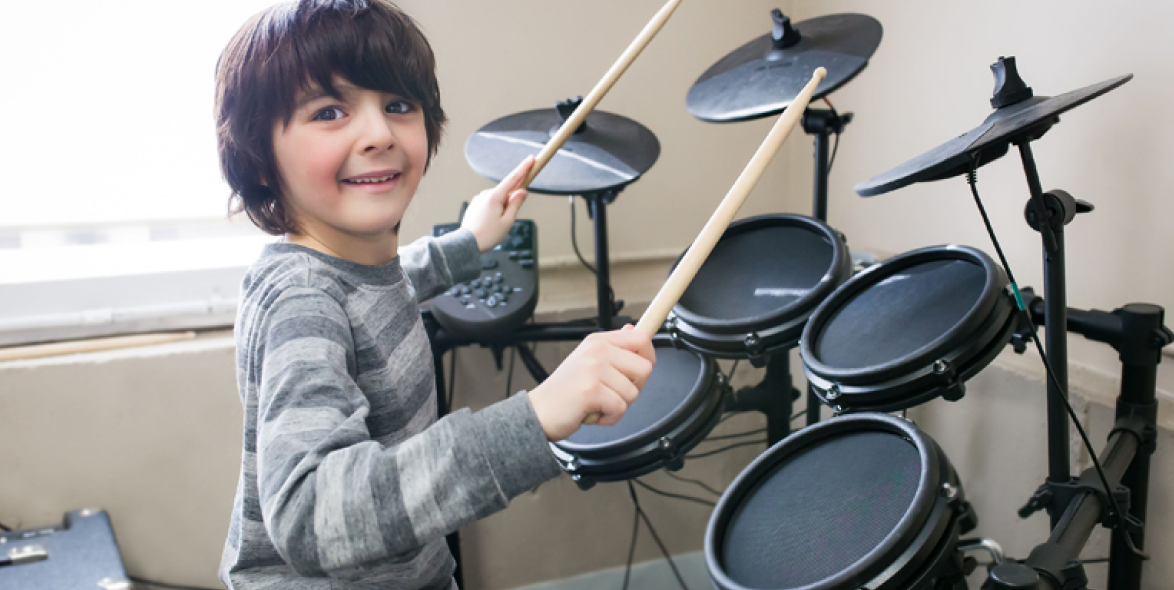
Drums are a strong starting point because they teach rhythm, timing, groove, and musical structure in a physical way. Students learn how music moves from the inside out. Drums are the heartbeat of many genres, including rock, pop, funk, jazz, R&B, hip-hop, Latin, and more. This makes drumming a powerful way for students to understand how songs are built and how rhythm shapes emotional energy. A drummer learns why one groove feels calm, another feels intense, and another feels uplifting. Unlike some instruments where timing can feel abstract, drumming makes rhythm physical. Students hear timing, feel timing, and embody timing through movement. Learners from Pointe-Claire and across Montreal often develop musical instinct quickly because the drum kit requires the mind, body, and ears to work together as one connected system.
What Do Drummers Learn First to Build Control?

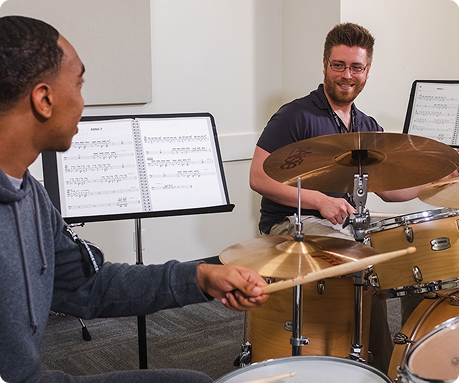
Drummers first build control through grip, timing, kit awareness, and slow practice. These basics make later rhythm, power, speed, and coordination easier to develop.

Basic Grip: Early practice begins with a relaxed stick grip that prevents tension and supports fluid movement.

Foundational Timing: Students learn how to keep a steady internal tempo instead of relying only on outside cues.

Drum Kit Mapping: Learners identify where sounds live, including kick, snare, toms, hi-hat, ride, and crash.

Practice Pad Technique: Before playing fast, students develop clean articulation and precision at slower tempos.

These early skills shape every stage of drumming. When fundamentals are strong, future growth feels more natural, controlled, and confident.

How Do Drummers Develop Rhythm More Deeply?

Drummers develop rhythm deeply by feeling pulse through movement, repetition, counting, listening, and groove practice. Rhythm becomes physical before it becomes fully musical. The drum kit teaches rhythm directly because students do not simply read patterns; they feel them through the body. Timing is not only an intellectual concept for drummers; it becomes the foundation of every beat, fill, and groove. When students internalize pulse, they gain control over how music feels. A steady drummer can make a song feel grounded, balanced, and emotionally consistent. This is why drumming is such a strong path into broader musical learning. Rhythm supports every instrument, so students who begin with drums often become stronger musicians even if they later explore piano, bass, guitar, or voice.

Genres You Can Explore During Drum Lessons at WIMA

$
Rock — for power grooves, backbeat strength, and driving energy.
$
Pop — for clean pocket playing and dynamic balance.
$
Funk — for syncopation and groove articulation.
$
Jazz — for swing feel, brushing technique, and independence.
$
R&B — for smooth pocket and tasteful fills.
Exploring multiple genres helps drummers discover their personal identity and musical comfort zone.

How Does Coordination Improve Over Time?

Coordination improves over time as drummers train each limb to move independently while still working together. This creates relaxed control, timing stability, and musical flow. One of the most exciting milestones in drumming is learning four-limb independence. The right foot may control the kick drum, the left foot may operate the hi-hat pedal, the right hand may play cymbal patterns, and the left hand may handle snare accents. At first, this can feel challenging because each limb must learn a separate role. With careful progression, those movements begin to connect into one unified sound. Proper instruction matters because coordination should develop without tension. Students who rush often become stiff, while students who progress step by step build flow, control, and confidence that supports stronger playing over time.

Why Do Rhythm and Power Build Confidence?

Rhythm and power build confidence because drummers physically feel their progress through groove, movement, volume, and control. Each successful beat creates a stronger sense of musical identity. Drumming can make students feel powerful and expressive at the same time. When a drummer holds a steady groove for the first time, the experience is both musical and emotional. The body is creating energy that fills space, supports other musicians, and shapes the direction of a song. This is why drumming often helps students develop stage presence and a more assertive artistic voice. Learners from Côte Saint-Luc and surrounding areas may find that drum practice helps them feel more centered, expressive, and confident. The strength built through rhythm often carries into performance, communication, and self-belief.

Start learning today with 50% off your first lesson on the instrument of your choice!
Why Does Structured Practice Work Better Than Random Online Learning?

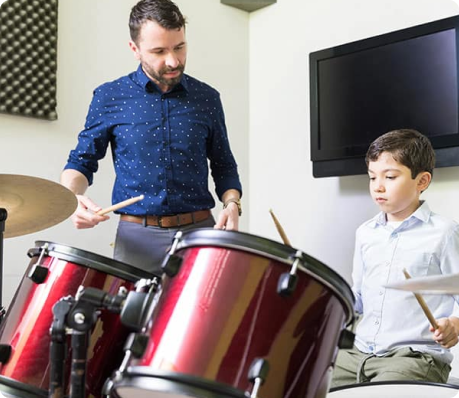
Structured practice works better because drumming is physical and technique-based. Guided progression helps students avoid tension, poor habits, and confusing practice routines. Online videos can be useful, but random tutorials rarely provide a complete learning path. Drummers need feedback on posture, grip, timing, speed, tension, and coordination. If students repeat incorrect movements, those habits can become part of muscle memory and become harder to fix later. A structured music learning environment helps students build skills in the right order, from basic technique to grooves, fills, independence, and performance readiness. Students from Beaconsfield and nearby communities often progress faster when a teacher observes their movement and corrects small issues early. Good habits built at the beginning support long-term rhythm, power, and control.

Why WIMA Is a Top Choice for Drum Classes in the West Island

WIMA is not only a music school—it is a community of musicians, teachers, and multi-instrumental artists who care deeply about helping students discover their potential. Drum classes at WIMA are designed to nurture creativity, discipline, coordination, and musical instinct all at once. Students get access to real kits, real instruction, and real guidance that matches their pace and goals. WIMA doesn’t force every drummer into the same mold; instead, teachers help students experiment with styles, genres, techniques, and artistic voice. Families in Saint-Laurent, and throughout the broader West Island region, choose WIMA because of the supportive culture—and the results. Students do not just “learn the drums.” They grow into musicians.

Start Your Drum Journey at WIMA and Experience Real Musical Power

If you want to feel rhythm in your hands and feet, if you want to build confidence through groove, if you want to understand music at the deepest physical level—drum classes at WIMA in Montreal are the perfect place to begin. Drumming is active, expressive, energizing, and incredibly rewarding. The sooner you start drum lessons, the sooner your internal rhythm strengthens—and the sooner you begin to feel like a real musician. Book your first drum lesson today and experience what rhythm, groove, coordination, and personal empowerment feel like through professional drum training.

Frequently Asked Questions

1. How do drummers build rhythm over time?

Drummers build rhythm through steady counting, pulse practice, repetition, listening exercises, and playing grooves at controlled tempos. Over time, rhythm becomes more natural and physical.

2. Why is control important in drumming?

Control helps drummers play with accuracy, balance, and consistency. It allows them to manage volume, timing, stick movement, fills, and coordination without unnecessary tension.

3. What should beginner drummers learn first?
Beginners should first learn stick grip, posture, basic timing, drum kit layout, simple beats, and practice pad technique. These foundations support stronger progress later.
4. How does drumming improve coordination?
Drumming improves coordination by training the hands and feet to perform different patterns at the same time. This four-limb independence develops gradually through structured practice.
5. What drumming styles help build power and rhythm?
Rock builds power and backbeat strength, pop develops clean timing, funk improves syncopation, jazz builds independence, and R&B strengthens groove and smooth control.
6. Why is structured practice better than random online tutorials?

Structured practice gives drummers a clear learning path and helps prevent bad habits. A teacher can correct grip, posture, timing, tension, and technique before mistakes become routine.

7. How does drumming build confidence?
Drumming builds confidence by helping students feel rhythm physically, play stronger grooves, and experience progress through repetition. Successful beats and performances strengthen self-belief.
8. How long does it take to build rhythm, power, and control?
The timeline depends on consistency, goals, and practice quality. Beginners may notice improvement within weeks, while stronger rhythm, power, coordination, and control usually develop over months and years.