
How Drummers Improve Beats, Timing, and Groove Through Practice

Why Is Drumming Strong for Musical Development?
Drumming is strong for musical development because it builds rhythm, coordination, timing, listening, and musical structure. These skills support confident playing with other musicians. Drumming is exciting, but it is also one of the clearest ways to understand how music works. Rhythm acts as the foundation of many styles, including rock, pop, jazz, funk, and world music. When students practise drums, they learn how beats support melodies, how transitions shape songs, and how timing affects musical energy. Drumming also strengthens coordination because the hands, feet, ears, and mind must work together. Learners from Pointe-Claire and across Montreal often discover that drum practice improves focus, discipline, and confidence. As timing becomes steadier, students begin to feel the flow of music more naturally and play with greater control.
What Should Drummers Practise to Improve Beats and Timing?
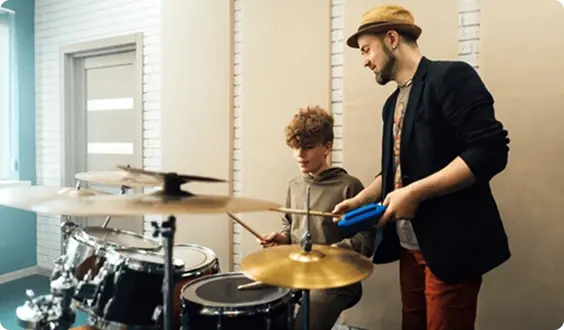
Technique and Stick Control: Students develop proper grip, hand positioning, stick rebound, posture, and relaxed movement to build strong foundational control.
Timing and Metronome Training: Rhythmic exercises help students internalize tempo, pulse, subdivisions, and consistency.
Groove and Musicality Development: Practice includes patterns from multiple genres to strengthen feel, dynamics, and expressive playing.
Customized Practice Plans: Every student benefits from guidance that reflects their goals, level, and musical background.
Together, these elements make drum practice more structured, purposeful, and effective for every skill level.
How Does Practice Build Coordination and Confidence?
Why Does the Right Learning Environment Improve Drum Practice?
How Do Drummers Master Timing Through Practice?
How Do Drummers Develop Groove and Feel?
Exploring Genres to Expand Rhythmic Vocabulary
Start learning today with 50% off your first lesson on the instrument of your choice!
How Does Drum Practice Improve Overall Musicianship?
Why Does Consistent Practice Support Long-Term Drum Growth?
Conclusion: Begin Your Drumming Journey with Confidence
Frequently Asked Questions
1. How do drummers improve beats, timing, and groove?
Drummers improve beats, timing, and groove through consistent practice, metronome work, stick control, coordination exercises, repetition, and playing different musical styles.
2. Why is timing important for drummers?
Timing is important because drummers help keep the music steady. Strong timing allows drummers to support bands, manage transitions, and play grooves with confidence.
3. What should beginners practise first on drums?
Beginners should first practise proper grip, posture, basic beats, simple rhythm patterns, counting, and slow metronome exercises to build a strong foundation.
4. How does metronome practice help drummers?
Metronome practice helps drummers develop steady tempo, internal pulse, subdivision accuracy, and consistency. It trains students to stay controlled during beats, fills, and transitions.
5. What is groove in drumming?
Groove is the feel, movement, and energy behind a rhythm. It comes from timing, dynamics, accents, syncopation, listening, and the drummer’s ability to support the music.
6. How do different genres improve drumming skills?
Different genres develop different rhythmic skills. Rock builds power, jazz improves swing and interaction, funk strengthens syncopation, pop improves clean timing, and Latin styles build layered rhythm awareness.
7. How does drum practice improve overall musicianship?
Drum practice improves listening, coordination, focus, rhythm awareness, emotional expression, and understanding of song structure. It also helps drummers lead and support other musicians.
8. How often should drummers practise to improve?
Drummers improve best with regular, focused practice. Short daily sessions or consistent weekly routines help build timing, control, groove, and confidence more effectively than occasional long practice.