
How Expert Guitarists Actually Learn
Why Is Guitar Learning a Lifelong Process?
How Does Guidance Shape Expert Guitar Learning?
Guidance helps expert guitarists learn faster by providing feedback, correcting mistakes, and improving technique efficiently.
Personalized Learning Approach
Expert guitarists benefit from learning that adapts to their strengths and goals. Instead of following a fixed routine, they adjust their practice based on their needs. This personalized approach ensures that time is spent improving the most important skills.
Building Strong Foundations
Even at advanced levels, fundamentals remain important. Proper technique, posture, and timing are constantly refined. This attention to basics ensures long-term consistency and prevents bad habits from affecting performance.

What Do Expert Guitarists Focus on in the Early Stages?
In early stages, expert guitarists focus on fundamentals like posture, chords, rhythm, and clean technique.
Developing Core Skills
Strong foundations are built through careful attention to posture, hand positioning, and basic chord shapes. Expert learners ensure that these fundamentals are mastered before moving forward. This prevents mistakes that could slow progress later.
Avoiding Common Mistakes
Beginners often develop habits that affect long-term playing, but expert learners actively correct errors early. By focusing on clean technique and accuracy, they create a solid base for future growth and more advanced playing.
How Do Expert Guitarists Advance Their Skills?
Start learning today with 50% off your first lesson on the instrument of your choice!
Styles You Can Explore with Guitar Lessons
One of the key ways expert guitarists grow is by exploring multiple musical styles, just like structured learning originally introduced different genres. Instead of staying limited to one type of music, they intentionally practice techniques that belong to specific styles. This approach helps them understand how rhythm, tone, and expression change across genres. By doing this, they become more versatile and adaptable players. Over time, exposure to different styles allows them to combine techniques and develop their own unique sound. This method keeps learning engaging and ensures continuous improvement across all areas of guitar playing.
Classical guitar: Classical guitar: Focuses on precision, fingerstyle technique, and controlled dynamics
Jazz guitar: Develops improvisation, chord voicings, and rhythmic flexibility
Rock and pop guitar: Builds riff playing, power chords, and expressive lead techniques
Acoustic and folk guitar: Enhances rhythm, storytelling, and natural tonal control
Guitar Lessons Near You in West Island
Convenience matters when committing to regular lessons, which is why our school offers accessible locations across the Montreal area. Students from Pointe-Claire, Beaconsfield, Côte Saint-Luc, and Saint-Laurent join us for lessons tailored to their interests.
Local Access, Global Standards
While we are based in Montreal’s West Island, our teaching quality matches global music education standards.
Community Connection Through Music
By bringing together students from nearby neighborhoods, our academy builds a thriving local music community where talent grows.
Building Confidence Through Performance Opportunities
Music is meant to be shared, and performance is a vital part of learning the guitar. At West Island Music Academy, students are encouraged to showcase their skills through recitals, ensemble classes, and live events. Performing in front of others helps build confidence, stage presence, and the ability to connect with an audience. These experiences also foster collaboration, as students often play alongside peers and discover the joy of creating music together. Over time, this exposure develops not just better musicians, but individuals who are self-assured and ready to share their passion.
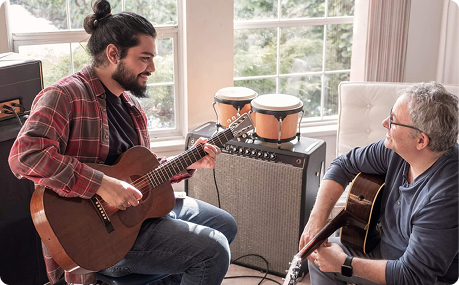
How Does Learning Guitar Benefit Different Age Groups?
Why Choose West Island Music Academy
Selecting the right place for your guitar lessons makes a significant difference. West Island Music Academy stands out by combining professional instruction, a friendly community, and opportunities for growth. Our focus is not only on technical skill but also on nurturing a lifelong appreciation for music. By offering lessons tailored to personal goals, convenient local access in Montreal, and supportive guidance from expert guitar teachers, we provide students with all the tools they need to succeed.
Conclusion: Start Your Guitar Journey Today
Every great guitarist began with the decision to take their first lesson. At West Island Music Academy, we make that first step both exciting and accessible. Our guitar teachers are dedicated to guiding students of all levels in discovering the joy of music, whether in Pointe-Claire, Beaconsfield, Côte Saint-Luc, Saint-Laurent, or greater Montreal. With expert instruction and a passion for helping students succeed, we create an environment where your musical goals can become reality. Now is the perfect time to pick up your guitar, start lessons, and unlock the melodies you’ve always wanted to play.