How to Learn Guitar Step by Step: Chords, Songs & Technique Guide
Learning guitar is one of the most versatile and rewarding musical journeys you can begin. From playing your first chords to developing better rhythm and technique, a step-by-step approach makes the process easier and more enjoyable. Many beginners feel overwhelmed because they try to learn too many skills at once without understanding the right order. A clear learning path helps you build confidence, avoid bad habits, and apply each new skill through real songs. Whether you are starting from scratch or improving your current playing, learning guitar step by step allows you to progress with purpose. Over time, chords, songs, and technique come together to create stronger and more expressive playing.

How Does a Step-by-Step Guitar Learning Path Help You Improve Faster?
A step-by-step guitar learning path helps you improve faster by teaching chords, rhythm, and technique in the right order, so each skill supports the next. A structured learning path removes guesswork from guitar practice and helps players understand what to focus on first. Instead of jumping randomly between songs, chords, and techniques, learners build core skills in a logical sequence. This usually starts with posture, hand positioning, rhythm, and timing before moving into more complex ideas. By learning in stages, guitar players avoid common mistakes that can slow progress or create tension. This approach also makes practice feel more manageable because each lesson has a clear purpose. Over time, learners gain better accuracy, stronger confidence, and the ability to learn new songs more independently.
What Should Beginners Learn First on Guitar?
Beginners should first learn proper posture, basic open chords, simple strumming patterns, and easy songs that build confidence. For beginners, the goal is to start playing music while building strong fundamentals. Early guitar practice should focus on posture, fretting-hand technique, basic open chords, and simple rhythm patterns. These skills help learners understand how the instrument works and how both hands coordinate together. Simple songs are also important because they allow beginners to apply new chords in a musical way instead of only practicing exercises.
Beginner Learning Focus
Proper posture and fretting-hand technique
Open chords and chord transitions
Basic strumming and rhythm patterns
Simple songs to apply new skills
How Do Intermediate Guitar Players Improve Technique and Control?
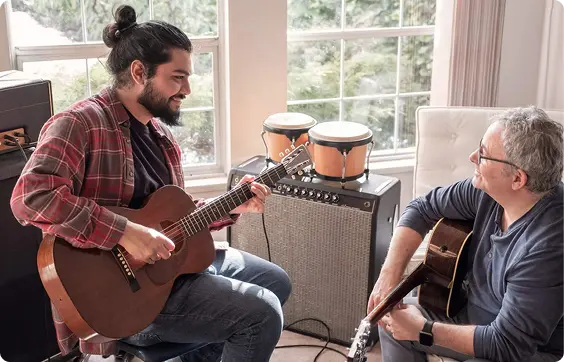
Intermediate guitar players improve by refining timing, strengthening chord transitions, learning scales, and exploring different playing styles. Once the basics feel comfortable, guitar learning moves into deeper skill development. Intermediate players focus on smoother chord transitions, cleaner tone, better rhythm control, and stronger musical expression. This stage often introduces barre chords, movable shapes, scale patterns, and lead techniques. Players may also begin exploring fingerstyle, picking development, or more style-based playing. Instead of simply memorizing shapes, intermediate learners start understanding how chords, scales, and rhythm connect musically. This helps them adapt to new songs and styles more easily. Progress may feel slower than the beginner stage, but the improvements become more refined, controlled, and meaningful over time.
Intermediate Skill Development
Barre chords and movable shapes
Scale patterns and lead techniques
Fingerstyle or picking development
Playing across multiple musical styles
Why Should You Learn Songs That Match Your Musical Taste?
Learning songs you enjoy keeps practice motivating and helps connect guitar technique to real music. One of the best ways to stay consistent while learning guitar is to practice music you actually enjoy. Songs make technique feel meaningful because chords, rhythm, and timing are connected to something familiar and exciting. Instead of treating practice as a set of dry exercises, learners can apply new skills through music that matches their personal taste. Whether the style is rock, pop, blues, classical, or acoustic, choosing the right songs keeps the process engaging. This approach also improves retention because learners are more likely to repeat material they enjoy. Over time, favorite songs become useful tools for building technique, confidence, and musical expression.
How Should Guitar Learning Change for Children, Teens, and Adults?
Guitar learning should adapt by age, with children needing engaging structure, teens benefiting from style-based learning, and adults needing flexible pacing. Guitar can be learned at any age, but the best learning approach depends on the student’s stage of life. Children often benefit from short, engaging sessions that build coordination, listening skills, and confidence through simple songs. Teens usually respond well to music that reflects their personal interests, making style-based learning especially effective. Adults often appreciate flexible pacing, clear goals, and practical routines that fit into busy schedules. While the core skills remain similar, the teaching pace and practice style should adjust to the learner. This age-aware approach keeps guitar learning enjoyable and helps students make steady progress without unnecessary pressure.
What Learning Format Works Best for Guitar Practice?
The best learning format depends on your schedule and learning style, but both in-person and online learning can work when practice is structured. Modern guitar learning can happen in different formats, including in-person sessions, online instruction, or independent practice supported by clear routines. In-person learning offers direct interaction, immediate correction, and a focused environment, which can help learners build confidence quickly. Online learning provides flexibility and convenience, making it easier for busy learners to stay consistent. Both formats can support strong progress when they include clear demonstrations, structured practice plans, and regular feedback. The most important factor is not the format alone, but the consistency and quality of practice. When learners follow a clear plan, they can improve effectively in either setting.
Start learning today with 50% off your first lesson on the instrument of your choice!
Why Does Location and Routine Matter When Learning Guitar?
Location and routine matter because convenient access and consistent practice habits make long-term guitar progress easier to maintain. Learning guitar becomes easier when practice fits naturally into daily life. Students who have access to convenient learning options across the West Island and Montreal are more likely to stay consistent. Areas such as Pointe-Claire, Côte Saint-Luc, Beaconsfield, and Saint-Laurent offer local relevance for learners who want music education close to home. Convenience reduces missed sessions, travel stress, and scheduling problems, which supports better long-term progress. A steady routine also helps build muscle memory and confidence. Whether practicing at home or in a local learning environment, consistency is what turns small improvements into lasting guitar skills over time.
How Does Learning Guitar Support Overall Musical Growth?
Learning guitar develops more than chord knowledge and song-playing ability. It improves rhythm, listening skills, coordination, and general musical understanding. As learners practice consistently, they begin to recognize patterns in songs, understand timing more clearly, and play with better control. These skills can also support other areas of music, including theory, songwriting, and ensemble playing. Over time, guitar learning helps students become more complete musicians rather than simply memorizing songs. This broader development builds confidence and creativity, whether the goal is personal enjoyment, performing with others, or writing original music. The more connected these skills become, the more natural and expressive guitar playing feels.
Choosing the Right Guitar Teachers for Your Goals
The quality of instruction depends heavily on the instructor. Skilled guitar teachers adapt lessons to individual goals, learning pace, and musical interests. Whether you aim to play casually, perform publicly, or advance technically, the right guidance makes the journey smoother and more rewarding. With professional Guitar Lessons, students gain structure, motivation, and clarity—learning chords, songs, and technique faster while enjoying every step of the process.
Frequently Asked Questions
1. What is the best way to learn guitar step by step?
The best way to learn guitar step by step is to start with posture, basic chords, rhythm, and simple songs before moving into advanced techniques.
2. What should beginners learn first on guitar?
Beginners should first learn open chords, simple strumming patterns, proper hand positioning, and easy songs that build confidence.
3. How long does it take to learn basic guitar?
Most beginners can learn basic chords and simple songs within a few weeks, but steady progress depends on consistent practice.
4. Why is learning songs important for guitar progress?
Learning songs helps connect chords, rhythm, and technique to real music, making practice more enjoyable and easier to repeat.
5. What skills should intermediate guitar players focus on?
Intermediate players should focus on barre chords, scales, smoother transitions, rhythm control, and exploring different playing styles.
6. Can children, teens, and adults learn guitar the same way?
The core skills are similar, but the learning approach should vary. Children need engaging structure, teens benefit from style-based learning, and adults often prefer flexible pacing.
7. Is online guitar learning effective?
Yes, online guitar learning can be effective when it includes structured practice, clear demonstrations, and regular feedback.
8. How can beginners avoid getting stuck while learning guitar?
Beginners can avoid getting stuck by following a clear practice plan, focusing on fundamentals, choosing enjoyable songs, and gradually increasing difficulty over time.
