Inside WIMA: West Island Music Academy’s Unique Approach to Learning
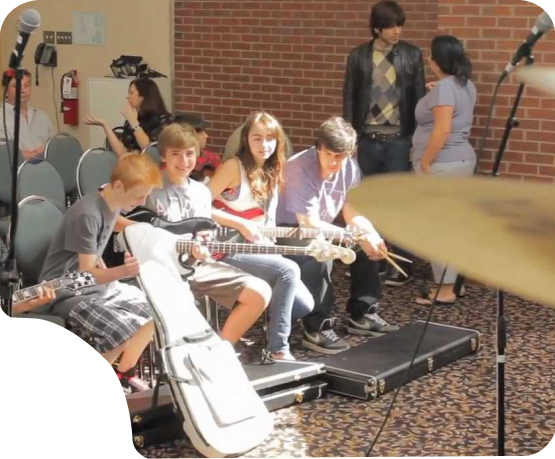
Inside WIMA, music education is not a traditional “one size fits all” model. Learning music is emotional, technical, messy, beautiful, personal, and different for every student. That is why WIMA, a top music school in Montreal, is designed to meet students where they are in their journey, and guide them toward excellence without pressure, panic, or unrealistic structure. Students have different starting points, natural talents, fears, and styles. Some are shy. Some are bold. Some want classical technique mastery. Others want to produce pop tracks. Some want stage performance. Some want clean studio perfection. That diversity is exactly what WIMA celebrates, because real musicianship comes from identity.

The WIMA Academic Philosophy of Customized Music Education

WIMA is built on the belief that personalized music instruction produces better, faster, more authentic musicianship. In other words, a great music school should not create clones of an instructor, but independent, confident performers, artists, composers, and creators who retain inspiration and discipline long into adulthood. When a student is taught in a way that acknowledges their personality, habits, interests, learning speed, and goals—music becomes a part of their identity. Teachers here don’t impose. They guide. They don’t reshape personality into what they think a musician “should be.” They allow originality to breathe. They help students solidify technique and harness it in a way that supports creativity rather than restricts it.

WIMA Classes Are Built to Build Skills

WIMA uses structured skill development frameworks. Instructors break down songs, technique, rhythm, interpretation, and theory into digestible components that are layered gradually to build ability.
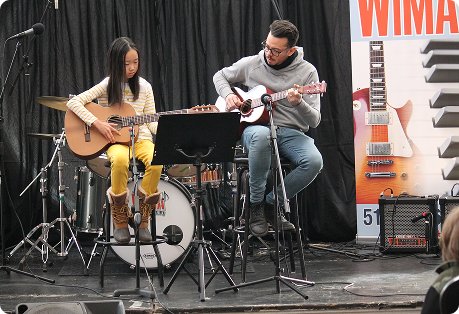
Class Elements Include:

Technique focus

Sight-reading improvement

Ear training exercises

Song interpretation guidance

Repertoire development goals

This balanced ecosystem ensures students can feel progress every week. Technical improvement is clear and trackable, while the emotional and artistic work is ongoing and freeing. It is all about balance.

Community: The Missing Ingredient in Most Music School Models

Many music school programs focus heavily on content and not enough on connection. But inside WIMA, the community is just as important as the curriculum. Students feel like they are part of a larger movement: the next generation of Montreal musicians. That matters because music is communication. Musicians grow faster with peers. They learn from others’ successes, failures, questions, experiments, breakthroughs, and moments of bravery. WIMA provides workshops, group ensembles, performance opportunities, recitals, and collaborative environments where students learn to play with others and for others. This sense of belonging unlocks a different kind of confidence—one that is not just technical but emotional and artistic.

Performance Is Not Optional—It’s a Skill

Performance is built into the WIMA system. This is intentional, because performing publicly transforms a student. They learn more in 4 minutes on stage than 4 weeks in a room alone.  WIMA performance progression includes:
$
Safe, supported micro-performances
$
Group ensemble showcases
$
Seasonal performances
Performance is built step-by-step so confidence is built step-by-step.

Why Parents in West Island Prefer WIMA’s Learning Model

Parents in West Island choose WIMA because it is built on a modern educational approach that understands the psychology of learning. A child cannot feel passion when music becomes pressure. A child cannot feel pride when music becomes fear. A child cannot feel independence when music becomes copying. Parents want their kids to love learning, not just pass exams. They want their kids to gain discipline without losing joy in the process. WIMA solves that problem. Instructors teach structure, but they teach it like a language, not like a punishment. Students become responsible, motivated, self-directed learners—not because they are forced to—but because they understand why commitment matters.

How Teachers at WIMA Are Selected and Trained

The quality of a music school is the quality of its teachers. That is why WIMA is very intentional and selective regarding instructor recruitment. Teachers are not chosen only for talent or degree—they are chosen for personality alignment, communication skill, emotional intelligence, mentorship ability, and growth mindset. A teacher who lectures is not enough. A teacher must understand how to translate experience into technique. They must know how to “play inside the student’s brain”—meaning they must be able to convert complex concepts into something the student can emotionally connect with. Every WIMA instructor is trained to deliver instruction that empowers, inspires, and builds confidence—not one that intimidates or overwhelms.

TAKE ADVANTAGE OF A 30-MINUTE LESSON ON THE INSTRUMENT OF YOUR CHOICE FOR 50% OFF!
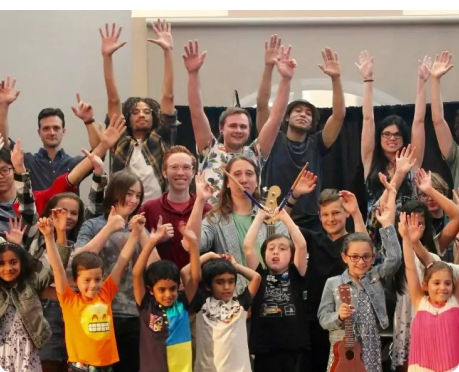
WIMA Understands That Music Careers Are Changing Fast

Music is not the same industry it was 20 years ago. Today, students need new skill sets to thrive. Songwriting matters. Recording matters. Production matters. Understanding YouTube matters. Understanding trends matters. Understanding audience psychology matters. Understanding social platforms matters. WIMA is among the few music school institutions that embrace modern realities of the music world, not just the classical, academic version of it. A great musician can build a business now. They can publish. They can launch covers. They can write originals. They can produce. They can share and distribute creativity digitally. Therefore, learning must include context, not just scales. WIMA curriculum blends old-school technique with new-world opportunity.

Music Education Is Also Local Identity

WIMA takes pride in being rooted in Montreal culture. The diversity here matters. The city is an artistic ecosystem. Creativity here looks different. This is why learning here is powerful. Students from Pointe-Claire to Côte Saint-Luc, Beaconsfield to Saint-Laurent all interact with art differently. WIMA understands that multiculturalism is an asset that shapes the identity of musicians. Music here is not a stereotype. It is an expression of cultural intersections.

Conclusion: Inside WIMA, Music is a Life Skill, Not a Hobby

Inside WIMA, students do not learn music for a trophy. They learn to think, feel, express, and grow. For some, music becomes career. For others, music becomes a lifelong companion that builds discipline, self-worth, creative expression, and emotional intelligence. That is why this music school is different: WIMA isn’t “teaching songs”—it’s teaching the art of becoming a musician with identity, direction, perspective, and confidence. And that is exactly why families trust WIMA. Because inside WIMA, the goal is not to manufacture performers—the goal is to empower human beings to discover their sound, develop their talent, and take ownership of their journey, no matter what path they choose next.