What Beginners Can Learn from a Skilled Violin Teacher

Music has a powerful way of connecting people, and the violin is one of the most expressive instruments a beginner can explore. For new players, learning from a skilled violin teacher opens the door to discipline, confidence, creativity, and a deeper appreciation for music. Beginners do not only learn where to place their fingers or how to move the bow; they also learn how to listen, practise, and express emotion through sound. At West Island Music Academy, students are guided in a welcoming environment that balances technical development with joyful discovery. With supportive instruction and a strong musical community in Montreal, beginners can build healthy foundations while enjoying every stage of their progress.

Why Should Beginners Learn from a Skilled Violin Teacher?

A skilled violin teacher helps beginners avoid poor habits, understand the instrument correctly, and build confidence from the start. Early guidance makes learning smoother, safer, and more enjoyable.
Beginning violin can feel challenging without proper direction. A skilled teacher brings training, performance experience, and patience into each session, helping students learn at a comfortable pace. At West Island Music Academy, instruction is adapted to each beginner’s goals, whether they want to prepare for recitals, join school music programs, or simply enjoy playing. Students benefit from clear explanations, practical demonstrations, and encouragement that keeps them motivated. Families across West Island and Montreal value this supportive approach because it makes learning feel structured but not overwhelming. With the right teacher, beginners gain both technical skills and confidence.

Key Reasons to Learn with WIMA

$

Experienced Teachers: Learn from musicians with proven performance backgrounds.

$

Personalized Approach: Guidance adapted to each student’s goals.

$

Supportive Community: A friendly, inspiring environment to grow musically.

$

Convenient Location: Accessible to students across West Island and Montreal.

How Can Beginner Violin Training Help Different Ages?

Beginner violin training supports learners of all ages by improving focus, discipline, creativity, and confidence. Children and adults benefit differently, but both can grow through structured musical practice.

Benefits for Kids

$

Boosts memory and cognitive development.

$

Builds focus and discipline.

$

Encourages creativity and self-expression.

Benefits for Adults

$

Reduces stress and promotes mindfulness.

$

Provides a creative outlet.

$

Builds confidence through skill mastery.

At West Island Music Academy, teachers adapt lesson plans to fit age groups and skill levels, ensuring every student progresses comfortably.

What Should Beginners Expect When Starting Violin?

Beginners should expect to learn instrument setup, posture, bow hold, tuning basics, and simple sound production. The first stage focuses on comfort, confidence, and healthy technique. Starting violin can feel exciting and slightly overwhelming, especially for students who have never held the instrument before. A skilled teacher helps make the first experience welcoming and manageable. Students are introduced to how the violin works, how to hold it properly, how to grip the bow, and how to create a clear sound on open strings. They may also learn simple rhythm patterns and basic tuning awareness. This early foundation helps students from Montreal and nearby areas like Côte Saint-Luc feel confident from the beginning. With patient guidance, beginners understand that progress starts with small, achievable steps.

First Practice Highlights

$

Instrument Setup: Learning how to hold and tune your violin.

$

Basic Bowing: Producing clear, consistent sound.

$

Foundations for Growth: Building confidence through simple exercises.

Start learning today with 50% off your first lesson on the instrument of your choice!

Why Does Structured Practice Matter for Long-Term Progress?
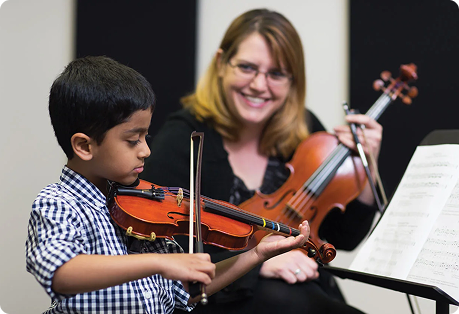
Structured practice matters because beginners need consistent steps to improve posture, technique, rhythm, and musical understanding. A clear learning path prevents confusion and supports steady growth. Consistency is essential when learning violin. At West Island Music Academy, beginners follow a clear structure that combines technique, music theory, listening skills, and repertoire. Students gradually move from open strings and simple scales to short melodies, études, and familiar pieces. Teachers explain how to practise effectively between sessions, helping students avoid frustration and stay motivated. By balancing technical accuracy with musical expression, students learn not only how to play correctly but also how to make music sound meaningful. This structured approach helps learners in West Island and Montreal advance with confidence while building habits that support long-term musical growth.

How Does a Skilled Teacher Prevent Common Beginner Mistakes?

A skilled teacher prevents beginner mistakes by correcting posture, bow grip, finger placement, rhythm issues, and tension early. This helps students progress without developing habits that slow them down. Learning violin requires patience and precise guidance. Beginners often struggle with holding the instrument, producing a smooth tone, reading notes, or coordinating both hands. A skilled teacher can identify these problems quickly and offer practical corrections before they become long-term habits. At West Island Music Academy, teachers provide constructive feedback, personalized practice tips, and encouragement that keeps students motivated. Their experience also helps beginners understand performance, musical expression, and stage confidence over time. This mentorship makes the learning process smoother and more inspiring. With expert support, students gain technical skill, artistic awareness, and the confidence to keep improving.

What Skills Can Beginners Develop with Violin Guidance?

Beginners can develop posture, bow control, music reading, rhythm, listening skills, expression, and performance confidence. These skills create a strong foundation for future musical growth. When beginners work with a skilled teacher at West Island Music Academy, they build a wide range of essential musical skills:
$

Posture and Technique: Proper instrument handling and bowing.

$

Music Reading: Developing strong sight-reading abilities.

$

Rhythm & Timing: Playing confidently with accurate tempo.

$

Ear Training: Recognizing notes, intervals, and harmonies.

$

Musical Expression: Learning to bring emotion into performances.

$

Performance Confidence: Preparing for recitals, exams, and live shows.
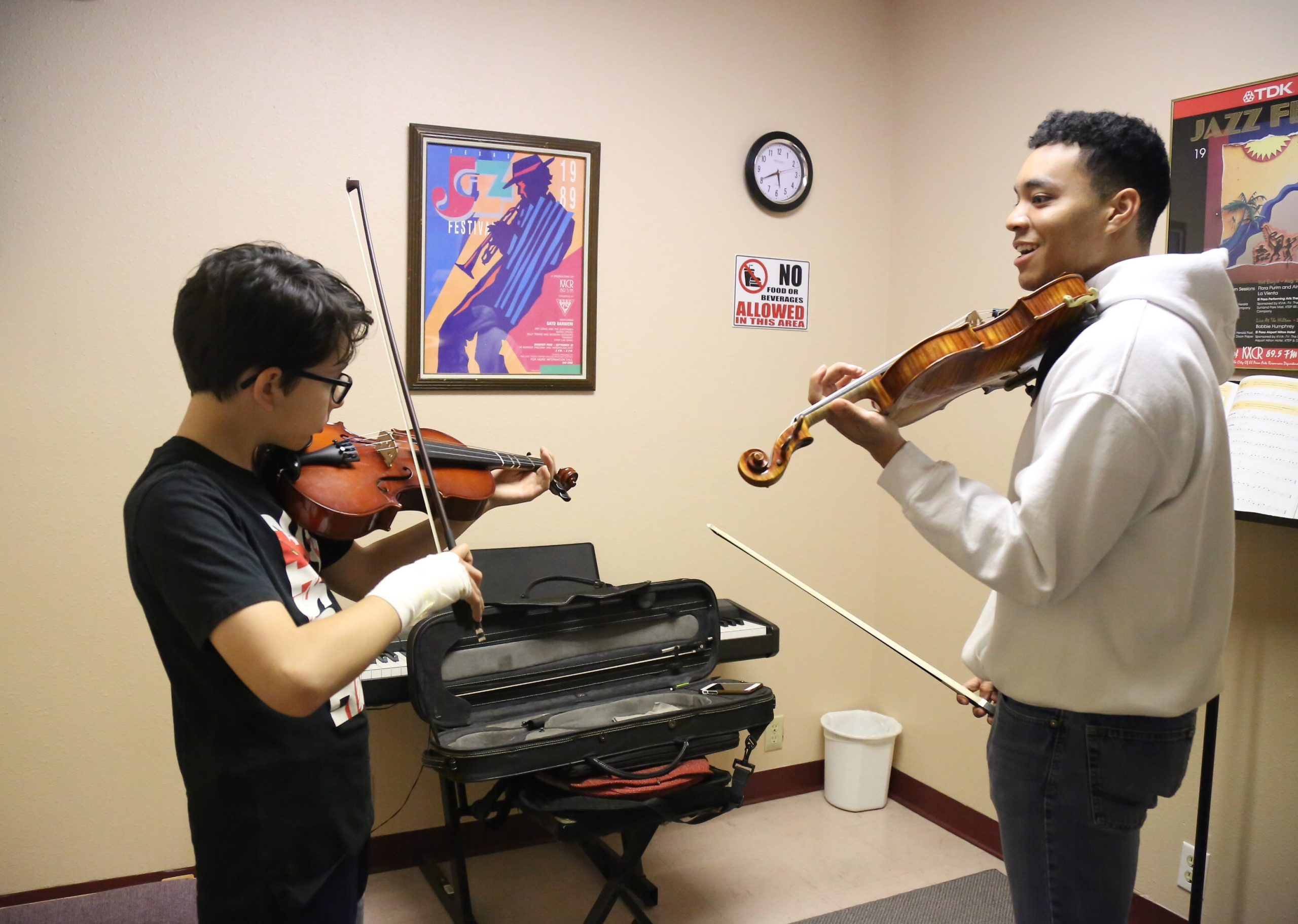
Each skill supports the next. Together, they help beginners become more comfortable, accurate, expressive, and prepared for continued musical development.

Why Does Learning Violin Build Lifelong Confidence?

Learning violin builds confidence because students see progress through small milestones. Each new skill teaches patience, persistence, and belief in personal growth. Playing the violin is about more than mastering notes and technique. For beginners, every achievement matters, from producing a clear sound to playing a first melody or performing for others. These milestones reinforce a student’s belief in their abilities. Skilled teachers at West Island Music Academy encourage students to view challenges as part of the learning process rather than signs of failure. This positive environment helps learners feel proud of their progress, no matter their age or background. Over time, students develop confidence that extends beyond music. They learn persistence, focus, and self-expression while carrying themselves with greater assurance.

How Can Beginner Learning Be Designed Around Each Student?

Beginner learning can be designed around each student through private support, group practice, flexible scheduling, and personalized goals. This makes progress more practical and enjoyable.

Flexible Options Available

$

Private Guidance: One-on-one attention for maximum progress.

$

Group Practice: Collaborative learning in a supportive setting.

$

Customized Scheduling: Morning, evening, and weekend availability.

Conclusion: Begin Learning with Strong Guidance

The violin is a timeless instrument capable of expressing emotion, beauty, and depth. For beginners, the journey requires patience, but skilled guidance makes the process more rewarding and less intimidating. At West Island Music Academy, students receive personalized support, structured learning, and a nurturing environment that helps them build both technique and creativity. From Montreal to Beaconsfield, Pointe-Claire, and surrounding communities, new musicians can discover the joy of learning violin with confidence. Whether a student is starting from the very beginning or returning after time away, strong teaching provides the foundation needed for lasting progress, musical enjoyment, and personal growth.

Frequently Asked Questions

1. What can beginners learn from a skilled violin teacher?
Beginners can learn posture, bow hold, finger placement, rhythm, music reading, tone production, and practice habits. A skilled teacher helps students build correct foundations from the start.
2. Why is teacher guidance important for beginner violin students?
Teacher guidance helps beginners avoid common mistakes that can slow progress, such as poor posture, weak bow control, or tension. Early correction makes learning smoother and more enjoyable.
3. What should a beginner expect when first learning violin?
Beginners usually start by learning how to hold the violin, grip the bow, tune the instrument, and produce simple sounds on open strings. These basics build comfort and confidence.
4. Can adults learn violin as beginners?
Yes, adults can learn violin as beginners. With patient instruction, flexible pacing, and consistent practice, adult learners can build technique, confidence, and musical enjoyment over time.
5. What skills do beginner violin students develop?
Beginner violin students develop posture, bowing technique, note reading, rhythm, ear training, musical expression, and performance confidence. These skills support long-term musical growth.
6. How does structured practice help beginners improve?
Structured practice gives beginners clear steps to follow between lessons. It helps students improve technique, build consistency, avoid confusion, and make steady progress over time.
7. Why does learning violin build confidence?
Learning violin builds confidence through small milestones, such as producing a clear tone, playing a first melody, or performing for others. Each achievement helps students trust their abilities.
8. Are private or group sessions better for beginners?
Private sessions provide focused one-on-one feedback, while group sessions help students learn with peers and build collaboration skills. The best option depends on the beginner’s goals, comfort level, and learning style.