What Makes a Great Music Academy? Programs, Teachers & Learning Outcomes

Choosing the right music academy is one of the most important decisions a student or parent can make. A strong academy does more than offer lessons—it builds musical confidence, nurtures creativity, and delivers measurable learning outcomes over time. In competitive cultural hubs like Montreal, families often compare programs, teaching quality, and student progress before committing. This guide explains what truly defines a great music academy, with a clear look at programs, teachers, and long-term learning outcomes—using the educational standards followed at West Island Music Academy (WIMA) as a practical reference point.

Instrument diversity without dilution

Another hallmark of a great music academy is a broad yet focused instrument offering. Piano, guitar, drums, voice, violin, bass, woodwinds, and ensemble programs should all follow the same pedagogical standards. This ensures that regardless of the instrument, students receive equally rigorous instruction and musical depth.

What programs should a great music academy offer?

A great music academy offers structured, level-based programs across multiple instruments, ages, and learning formats, allowing students to progress without outgrowing the school.

Program variety that supports long-term growth

A high-quality music academy is designed to serve beginners, intermediate students, and advanced musicians under one educational framework. This continuity matters. Students should not need to change schools every time they reach a new skill level.

Strong programs typically include:

$
Private music lessons for personalized progress
$
Group classes that develop ensemble and listening skills
$
Early childhood music programs for foundational rhythm and coordination

At WIMA, programs are structured so students can begin young, refine technique through adolescence, and continue as adults—without breaking educational consistency.

How important are teachers in a music academy?

Teachers are the core of a music academy; their experience, adaptability, and communication skills directly determine student success.

Beyond credentials: teaching ability matters

While formal music degrees and performance backgrounds are essential, a great music academy prioritizes teaching skill just as highly as musical expertise. The best instructors know how to:

Adapt explanations to different learning styles

Balance technique with enjoyment

Set realistic milestones for each student

At WIMA, teachers are active musicians who combine academic training with real-world performance experience. This dual background helps students connect theory with practice in a meaningful way.

Consistency and mentorship

Great music academies value long-term teacher-student relationships. When instructors track progress over months and years, they can anticipate challenges, refine goals, and guide students with confidence. This mentorship model creates trust, motivation, and measurable improvement.

Start learning today with 50% off your first lesson on the instrument of your choice!

How does structure improve results in a music academy?

Structured learning paths help students progress faster and avoid plateaus.

Organized progression across levels

A great music academy uses clear level progression rather than random lesson planning. Beginners focus on fundamentals, intermediate students refine technique and repertoire, and advanced learners work toward specialization or assessment goals. This structured approach allows instructors to identify gaps early and adjust lessons before frustration sets in.

Flexibility within structure

Structure does not mean rigidity. At WIMA, students explore styles they enjoy—classical, jazz, rock, or contemporary—while still following a pedagogically sound sequence. This balance keeps motivation high without compromising educational quality.

The role of environment and facilities
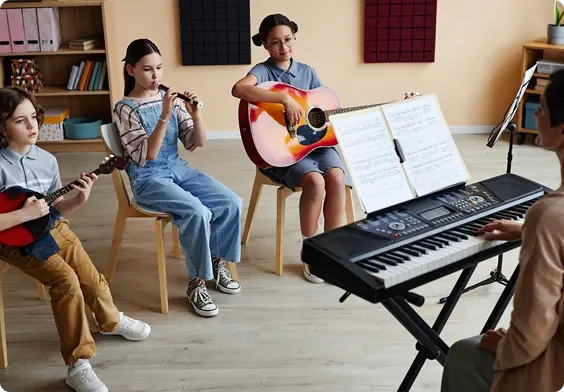
Great music academies invest in professional learning spaces. Well-equipped studios, proper acoustics, and quality instruments allow students to focus fully on learning without technical distractions. Purpose-built classrooms also support different formats—from one-on-one instruction to group rehearsals—ensuring every program is delivered in an environment suited to its goals.

Why WIMA reflects the qualities of a great music academy

WIMA exemplifies what families should look for in a music academy:

Comprehensive programs for all ages and levels

Experienced teachers who specialize in education, not just performance

Structured learning outcomes with room for creativity

Strong community presence across Montreal and the West Island

Rather than treating music lessons as isolated sessions, WIMA approaches music education as a long-term journey—one built on consistency, expertise, and measurable progress.

Final thoughts: choosing the right music academy

A great music academy is defined by alignment—between programs, teachers, and outcomes. When these elements work together, students don’t just learn music; they develop discipline, confidence, and a lifelong connection to the arts. For families seeking a trusted, well-structured music academy in Montreal, WIMA represents an educational model where musical growth is intentional, supported, and sustainable.

Frequently Asked Questions

1. What makes a music academy different from a private tutor?
A music academy offers structured programs, consistent teaching standards, performance opportunities, and long-term learning pathways, while a private tutor usually works independently without an integrated curriculum.
2. How do I know if a music academy is right for beginners?
A great music academy provides beginner-friendly programs with clear progression, patient instructors, and age-appropriate teaching methods that focus on fundamentals and confidence-building.
3. Why is program structure important in a music academy?
Program structure ensures students progress logically from basic skills to advanced techniques, helping them avoid learning gaps and stay motivated over time.
4. What qualifications should music academy teachers have?
Teachers should have formal music education, teaching experience, and the ability to adapt lessons to different learning styles—combining technical expertise with strong communication skills.
5. Do music academies help students prepare for exams and performances?
Yes, many academies integrate exam preparation, recital performances, and ensemble work into their programs to support well-rounded musical development.
6. Can adults benefit from enrolling in a music academy?
Absolutely. A professional music academy offers flexible programs for adults, allowing them to learn at their own pace while still following a structured curriculum.
7. How does location impact choosing a music academy?
A conveniently located music academy encourages consistent attendance, which is crucial for progress—especially for children and long-term students.
8. Why do families choose West Island Music Academy (WIMA)?
Families choose WIMA for its structured programs, experienced teachers, clear learning outcomes, and strong presence across Montreal and the West Island.