
Which Vocal Techniques Help Singers Improve Their Voice?
The voice is a personal instrument, but improving it requires more than repeatedly singing songs. Without proper technique, singers may experience inaccurate pitch, restricted range, inconsistent tone, or unnecessary vocal fatigue. Proven vocal techniques help develop control by coordinating breathing, posture, resonance, listening, and articulation. Whether someone is a complete beginner or an experienced performer, structured training provides a reliable path toward improvement. Each exercise should serve a clear purpose, such as stabilizing airflow, reducing tension, strengthening pitch recognition, or creating smoother transitions between registers. At West Island Music Academy, students receive personalized guidance based on their voices and goals. This guide explains which techniques produce meaningful results and how singers can apply them safely at different stages of development.

Why Do Professional Vocal Techniques Improve Your Voice Faster?
Professional vocal techniques accelerate improvement by correcting inefficient habits and showing singers how breathing, posture, and resonance work together. Personalized feedback ensures that exercises address the singer’s actual needs. Many singers initially depend on instinct. Although regular singing can build familiarity, repetition alone may reinforce throat tension, poor breathing, or unstable pitch. Structured singing lessons replace this uncertainty with exercises selected for specific technical challenges. An instructor can observe posture, airflow, vowel formation, and physical tension before explaining what needs to change. Corrections can then be made before unhelpful habits become deeply established. With consistent practice, students learn to create sound with less physical effort. This leads to greater endurance, improved tone, reliable pitch, and more confidence when learning or performing songs.
How Does Breath Control Strengthen Vocal Technique?
Proper support does not mean taking the largest possible breath. It involves managing air efficiently while keeping the shoulders, neck, jaw, and throat relaxed. As this coordination improves, singers gain greater stability across their range. They can sustain notes, control dynamics, and project more clearly without relying on excessive volume or pressure.
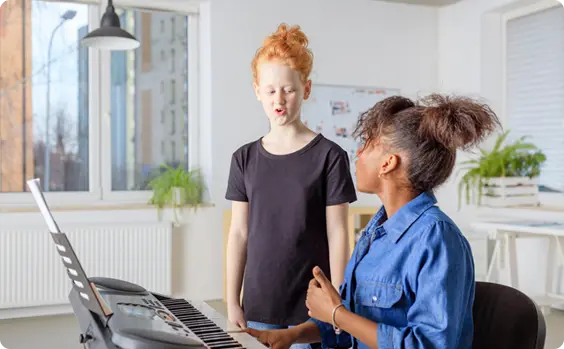
Which Breathing Skills Should Singers Develop?
Controlled airflow for sustained notes
Coordination between breath and phrasing
Reduced throat tension during singing
These skills help singers create a stable tone without pushing from the throat. Diaphragmatic breathing supports the voice through coordinated expansion around the lower ribs and abdomen. Controlled exhalation then prevents air from escaping too quickly.
How Can Singers Expand Their Range and Improve Tone Safely?
Which Techniques Help Beginners Build Confidence?
Beginners build confidence through comfortable sound production, basic pitch training, gentle warm-ups, and songs suited to their current range. Early training should prioritize exploration and healthy habits rather than perfection. Many new singers feel uncertain about the quality of their voices. Some avoid singing fully because they fear missing notes or sounding different from experienced performers. A supportive approach removes this pressure and focuses on manageable technical goals.
Beginners first learn how to breathe comfortably, match simple pitches, and produce sound without unnecessary tension. They can then apply these skills to familiar songs. Recognizing small improvements helps students trust their voices and become more willing to experiment. Confidence develops naturally when singers understand what they are doing and can repeat successful results.
What Foundational Skills Should Beginners Learn?
Gentle warm-ups and healthy vocal habits
Basic pitch matching and ear training
Comfortable exploration of vocal range
Simple songs that reinforce technique
Which Vocal Techniques Help Intermediate Singers?
Start learning today with 50% off your first lesson on the instrument of your choice!
How Do Advanced Vocal Techniques Improve Performance?
Technical refinement allows singers to make expressive choices without losing control. They can change volume, tone colour, articulation, and phrasing to communicate the meaning of a song. Advanced training also prepares singers for rehearsals, auditions, recordings, and live performances. By strengthening both vocal endurance and artistic interpretation, these techniques help transform technically accurate singing into a confident and emotionally engaging performance.

Advanced vocal lessons may include:
Dynamic control and phrasing
Interpretation and emotional delivery
Performance preparation and vocal health strategies
These techniques prepare singers to perform challenging material consistently. Advanced warm-ups develop flexibility and stamina, while dynamic exercises help singers move between soft and powerful passages without losing tone quality.
How Are Vocal Techniques Adapted for Kids, Teens, and Adults?
Private vs. Group Vocal Training
In-Studio and Remote Vocal Training
Singing Lessons in the West Island and Montreal
Why Singing Lessons Work for Everyone
Frequently Asked Questions
1. Which vocal techniques help improve the singing voice?
2. How does breath control improve singing?
Breath control provides steady airflow for sustained notes, accurate pitch, stronger projection, and smoother phrasing. It also reduces the need to push sound from the throat.
3. Can vocal range be expanded safely?
Yes. Singers can gradually expand their range through lip trills, slides, scales, vowel adjustments, and register exercises without forcing difficult high or low notes.
4. What causes an inconsistent vocal tone?
Inconsistent tone can result from unstable airflow, poor vowel formation, physical tension, or unbalanced resonance. Focused exercises and personalized feedback can correct these issues.
5. How can beginners improve pitch accuracy?
Beginners can improve pitch through note-matching activities, scales, interval exercises, ear training, and slow song practice. Regular feedback helps identify and correct inaccurate notes.
6. How often should singers practise vocal techniques?
Singers should complete short, focused practice sessions several times per week. Consistent practice is generally more effective and healthier than occasional, excessively long sessions.
7. Are the same vocal techniques suitable for every age?
The core principles remain similar, but exercises should be adapted to the singer’s age, physical development, experience, and goals. Children, teenagers, and adults require different teaching approaches.
8. Can vocal techniques improve performance confidence?
Yes. Reliable breathing, pitch, range, and tone give singers greater control during performances. Preparation and repeated performance practice also help reduce uncertainty and manage nervousness.