Why Enrolling in a Music School Accelerates Learning: Programs & Benefits

Learning music is both an art and a discipline. While many people try to learn on their own, students who enroll in a professional music school consistently progress faster, develop stronger technique, and stay motivated longer. Structured programs, experienced instructors, and a supportive learning environment turn scattered practice into measurable growth. At West Island Music Academy, students of all ages benefit from organized music lessons designed to build skills step by step. This guide explains why music schools accelerate learning, how their programs work, and what benefits students and parents can realistically expect across the West Island and Montreal.
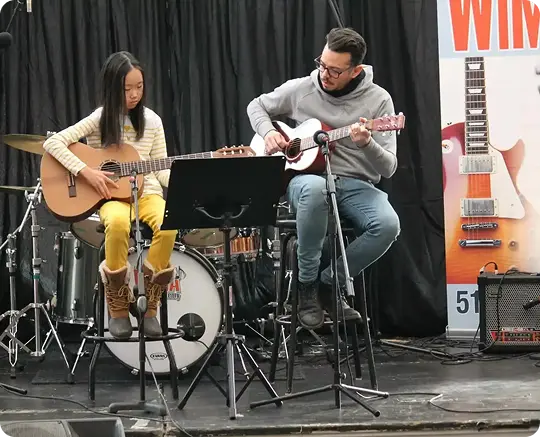
Guitar instructor and student performing together on stage

Why a Music School Helps Students Learn Faster

A music school accelerates learning by providing structured programs, expert instruction, and consistent feedback that guide students efficiently from beginner to advanced levels. Self-directed learning often lacks structure. Students may practice incorrectly, repeat mistakes, or feel unsure about what to learn next. In a professional music school, music lessons follow a clear progression designed to build skills in the correct order.
Teachers observe posture, technique, rhythm, and musical understanding in real time. This immediate feedback prevents bad habits and saves months—or even years—of correction later. With clear goals and accountability, students remain focused and motivated, leading to faster and more confident progress.

Structured Music Programs vs Self-Teaching

Structured music programs provide a logical learning path, while self-teaching often leads to gaps in technique and slower progress. One of the biggest advantages of a music school is its organized curriculum. Instead of randomly choosing songs or exercises, students follow programs that develop technique, theory, and musical expression together.

How Structured Music Lessons Make a Difference

$
Skills are introduced in the correct sequence
$
Technique is reinforced before advancing
$
Progress is measured with clear milestones
$
Practice becomes more efficient and focused
These structured music lessons remove guesswork. Students know exactly what to practice and why it matters, which dramatically improves learning speed and confidence.

Expert Teachers and Personalized Guidance

A strong music school is defined by its instructors. Qualified teachers understand not only how to play but also how to teach effectively. They adapt music lessons to the student’s age, experience, and goals. Personalized instruction means beginners receive patience and clarity, while advanced students get precise technical feedback. Teachers also adjust learning strategies when students feel stuck, ensuring steady progress instead of frustration. This individualized attention is one of the key reasons students advance faster in a music school setting.

Music Lessons for Children: Building Skills Early

Music lessons in a music school help children develop discipline, coordination, and listening skills while building a strong musical foundation.
For children, early exposure to structured music lessons has long-term benefits. Learning in a music school environment teaches focus, responsibility, and goal-setting in an age-appropriate way.

Music student posing with guitar at a West Island Music Academy event

Benefits of Music Lessons for Kids

Improved concentration and memory

Stronger coordination and motor skills

Increased confidence through achievement

Healthy study and practice habits

A professional music school ensures lessons remain engaging while maintaining structure. This balance helps children enjoy music while developing skills that support both musical and academic growth.

Music Lessons for Teens: Direction and Motivation

As students enter their teenage years, motivation becomes closely tied to identity and self-expression. Music lessons at this stage provide direction while allowing creative exploration. In a music school, teens benefit from structured goals, performance opportunities, and instructors who understand how to challenge without overwhelming. Lessons encourage independence while reinforcing discipline, helping teens stay committed and inspired.

In-Studio and Online Music Lessons: Flexible Programs

Modern music schools offer flexibility through both in-studio and online music lessons. In-person instruction provides direct interaction and acoustic feedback, while online lessons offer convenience and accessibility. A quality music school maintains the same teaching standards in both formats. Online music lessons include real-time feedback, structured exercises, and guided practice plans, ensuring students continue progressing regardless of location.

Start learning today with 50% off your first lesson on the instrument of your choice!

Music School Programs in the West Island and Montreal

Accessibility plays a major role in consistency. Students enrolled in a music school across the West Island and Montreal benefit from convenient locations and reliable scheduling. Programs are available in Pointe-Claire, Côte Saint-Luc, Beaconsfield, and Saint-Laurent, each mentioned once to support local search relevance. This regional presence allows families and adult learners to integrate music lessons into their routine while staying connected to a supportive musical community.

Long-Term Benefits of Enrolling in a Music School

Enrolling in a music school builds long-term skills, confidence, and discipline that extend beyond music itself. The benefits of structured music lessons go far beyond learning an instrument. Students develop patience, problem-solving skills, and creative thinking. Over time, these skills influence academic performance, professional growth, and personal confidence. A music school also provides continuity. Students progress through levels with consistent guidance, avoiding the stop-start cycle common in self-directed learning.

Setting Realistic Expectations for Music Lessons

Learning music is a process, not an instant result. A professional music school helps students set realistic expectations, focusing on steady improvement rather than quick fixes. With consistent music lessons, students gradually develop technique, musical understanding, and confidence. Progress may feel gradual, but it is solid and lasting—built on proper foundations rather than shortcuts.

Choosing the Right Music School for Accelerated Learning

Selecting the right music school is one of the most important decisions in a musical journey. Look for structured programs, experienced instructors, and an environment that supports both kids and adults. When learning is guided, personalized, and well-organized, music lessons become more effective and enjoyable. Enrolling in a professional music school accelerates progress, builds confidence, and creates a lifelong connection to music.

Frequently Asked Questions

1. Why does a music school help students learn faster than self-teaching?
A music school provides structured programs and guided music lessons that prevent bad habits and keep students progressing in the right order.
2. Are music lessons at a music school suitable for complete beginners?
Yes. Music lessons are designed for beginners and focus on fundamentals, clear goals, and steady progress from the first class.
3. Do children benefit more from music lessons in a music school?
Absolutely. A music school helps children develop discipline, coordination, and listening skills while building a strong musical foundation.
4. Can adults still make good progress by enrolling in a music school?
Yes. Adults often progress quickly with structured music lessons that focus on clear goals and efficient practice methods.
5. What is the advantage of structured music lessons?
Structured music lessons follow a proven learning path, helping students build technique and musical understanding without gaps.
6. Are private music lessons better than group lessons?
Both are valuable. Private music lessons offer personalized instruction, while group lessons build collaboration and listening skills.
7. Do music schools offer online music lessons as well?
Many music schools offer online music lessons that maintain structure, real-time feedback, and consistent learning standards.
8. What should students realistically expect from music lessons?
Students should expect gradual, steady improvement with consistent practice rather than instant results when learning at a music school.