Beginner Violin Preparation Guide: What to Bring and How to Progress

Beginning violin is an exciting and meaningful step into music. Whether a parent is preparing a child, an adult is returning to music, or a beginner is starting fresh, the violin rewards patience, focus, and consistency. Good preparation helps students feel more confident before they even play their first note. Early violin learning works best when students understand what to bring, what skills come first, and how progress usually develops. At West Island Music Academy, beginner instruction is structured to feel encouraging and clear. Knowing what to expect reduces uncertainty and allows students to focus on posture, sound, rhythm, and steady improvement from the very beginning.
What Should Beginners Bring When Preparing for Violin?

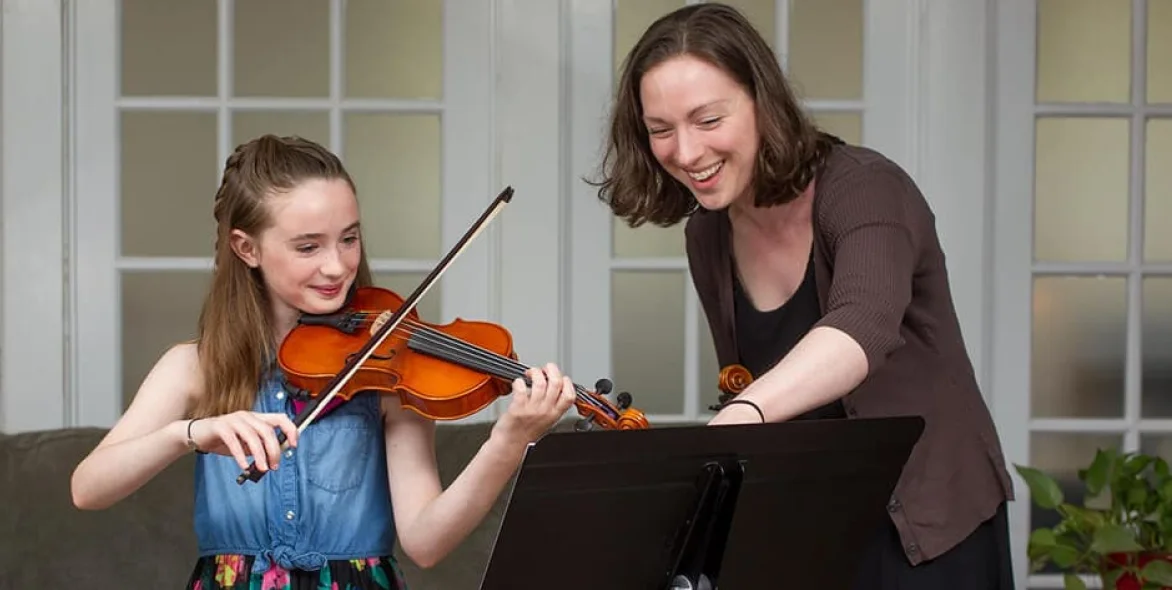
Beginners should bring a correctly sized violin, bow, rosin, shoulder rest, and note-taking materials. Having the right items ready helps the first learning experience feel smoother. Preparation plays an important role in successful beginner violin learning. When students arrive with the right essentials, the teacher can focus on posture, comfort, sound production, and early technique instead of spending too much time solving setup problems. A properly sized instrument is especially important for younger learners because poor sizing can affect posture and confidence. Beginners should also have a shoulder rest for stability, rosin for bow traction, and simple materials for tracking practice notes. If a student does not yet own an instrument, guidance on rentals, sizing, and beginner-friendly setup can help families make better decisions before lessons begin.

Essentials to Bring

$
A properly sized violin and bow
$
Rosin for bow traction
$
Shoulder rest for balance and comfort
$
Notebook or folder for lesson notes
$
Pencil for marking reminders or exercises
If a student does not yet have an instrument, many beginner programs help families choose rentals or understand sizing before instruction begins. This support is especially helpful for children who need an instrument that fits their body comfortably.

What Do Beginners Usually Learn First?
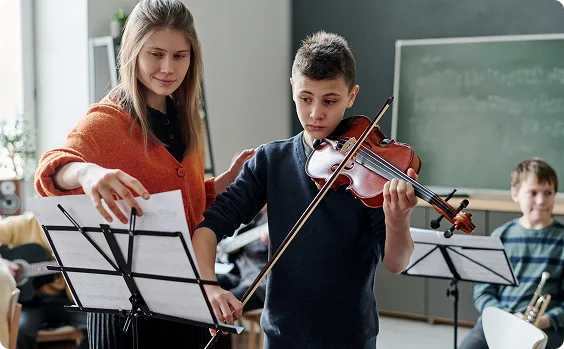
Beginners usually learn posture, violin hold, bow hold, open-string sound, rhythm, listening, and simple practice habits. These basics create the foundation for future progress. The first stage of violin learning focuses on comfort, awareness, and control. Rather than rushing into songs, beginners need to understand how to stand or sit correctly, how to hold the instrument safely, and how the bow creates sound. Open strings are often introduced before finger placement because they allow students to focus on bow movement and tone. Simple rhythm and listening exercises help connect physical movement with musical understanding. These early concepts support all future development. When fundamentals are introduced clearly and patiently, students gain confidence and avoid habits that may slow progress later in their violin journey.

Skills Introduced at the Beginning

Correct standing or sitting posture

Proper violin and bow hold

Producing sound on open strings

Introduction to rhythm and listening

Simple practice habits

These early concepts form the backbone of future progress. When beginners understand the basics from the start, they can build stronger coordination, better sound control, and more confidence as learning continues.

How Does Structured Guidance Help Beginners Progress Safely?

Structured guidance helps beginners progress safely by introducing skills gradually, correcting technique early, and building consistent practice routines. This prevents frustration and supports healthy playing. The violin is a precise and physical instrument, so beginners benefit from clear instruction and patient correction. Without structure, students may struggle with posture, bow control, tension, or intonation. A gradual learning path helps students move forward at a pace that matches their age, ability, and comfort level. Teachers reinforce fundamentals before introducing new challenges, which allows students to feel successful while still improving accurately. This type of guidance protects students from rushing into habits that are difficult to correct later. With steady support, beginners can develop confidence, physical comfort, and musical understanding while progressing in a safe and encouraging way.

Why Are Posture, Bowing, and Sound Control So Important?

Posture, bowing, and sound control are important because they affect tone quality, comfort, endurance, and long-term technique. Strong basics make future playing easier. Posture and bow technique are central to beginner violin preparation. These elements directly influence how comfortably a student plays and how clearly the instrument sounds. Early practice should include relaxed shoulder alignment, balanced instrument position, flexible hand shape, and steady bow movement. Teachers often observe small details such as bow angle, wrist position, and body tension because small corrections can make a major difference. When these habits are developed early, students usually experience faster improvement and better control as music becomes more complex. Sound control begins with simple movements, but over time it becomes the foundation for expressive tone, confidence, and musical growth.

How Often Should Beginners Practise After Starting Violin?

Beginners should practise 10–20 minutes per day, focusing on consistency rather than long sessions. Short, focused practice helps build muscle memory and confidence. Regular practice is one of the most important parts of beginner violin progress. Short daily sessions are often more effective than occasional long practice because the body needs repetition to remember posture, bow movement, rhythm, and finger placement. Beginners should focus on slow, accurate practice rather than rushing through exercises. Reviewing notes before starting can help students remember what their teacher emphasized. As students continue learning, practice time can increase naturally based on age, goals, and progress. The main priority at the beginning is building a routine that feels manageable, focused, and positive so practice becomes a habit rather than a burden.

Effective Beginner Practice Habits

$
Practice daily in short sessions
$
Focus on posture and relaxed movement
$
Repeat exercises slowly and accurately
$
Review lesson notes before starting
As students continue developing, practice time can increase naturally. The goal is to build a routine that supports steady improvement while keeping the process encouraging and realistic.

How Should Violin Preparation Differ by Age?

Violin preparation should differ by age because children, teens, and adults learn with different attention spans, goals, and motivations. Teaching style should adapt while keeping foundations consistent. Violin learning adapts to each student. While posture, bow control, rhythm, and listening remain important for everyone, the way these skills are introduced can vary. Children often benefit from engaging, structured activities that include rhythm, movement, and repetition. Teen students may focus on school music goals, repertoire, ensemble preparation, or expressive development. Adult beginners often appreciate goal-oriented guidance that respects their pace while maintaining technical clarity. Regardless of age, every student works toward stronger coordination, listening skills, and musical confidence. A flexible approach helps learners feel understood while still building the foundations needed for long-term progress.

TAKE ADVANTAGE OF A 30-MINUTE LESSON ON THE INSTRUMENT OF YOUR CHOICE FOR 50% OFF!

How Can Beginners Track Progress Over Time?

Beginners can track progress by noticing improvements in tone, bow control, finger placement, music reading, and confidence. Small milestones show that learning is moving forward.

Common Early Milestones

Consistent open-string tone

Improved bow control

Accurate basic finger placement

Reading simple musical notation

These milestones help beginners understand their progress clearly. Each achievement builds confidence and prepares students for more complex skills, stronger tone, and expressive playing.
Learning Violin in the West Island and Montreal

Families across the West Island and Montreal value structured violin education that fits modern schedules while maintaining strong teaching standards. Students from Pointe-Claire, Côte Saint-Luc, Beaconsfield, and Saint-Laurent benefit from consistent instruction, clear expectations, and long-term musical planning. A well-organized beginner violin program helps students understand what to bring, how to practise, and how progress develops over time. Local access also supports consistency because lessons are easier to fit into school, work, and family routines. With the right environment, beginners can build confidence while feeling connected to a supportive musical community. This structure makes learning more sustainable and rewarding.

Setting the Right Expectations for Beginner Violin Progress

Beginner violin preparation is about building comfort, awareness, curiosity, and patience. Progress does not happen overnight, but steady guidance and repetition help students improve with confidence. The first stage should focus on posture, bow hold, open strings, rhythm, listening, and simple practice habits. With structured support, students develop not only musical skill but also discipline, focus, and self-belief. Starting with the right foundation makes every future practice session more productive and enjoyable. Whether the learner is a child, teen, or adult, violin becomes more rewarding when expectations are realistic and progress is celebrated one step at a time.

Frequently Asked Questions

1. What should beginners bring when preparing to learn violin?
Beginners should bring a properly sized violin and bow, rosin, shoulder rest, notebook or folder, and a pencil. These essentials help students stay comfortable, organized, and ready to focus on learning.
2. Why is violin sizing important for beginners?
Correct violin sizing helps beginners maintain proper posture, avoid strain, and play with better comfort. This is especially important for children because an oversized instrument can make learning harder.
3. What do beginners usually learn first on violin?
Beginners usually start with posture, violin hold, bow hold, open strings, rhythm, listening skills, and simple practice habits. These basics create the foundation for future progress.
4. How does structured guidance help beginner violin students?
Structured guidance helps beginners learn skills in the right order, correct mistakes early, and avoid poor habits. It also makes learning feel safer, clearer, and more encouraging.
5. How often should beginners practise violin?
Beginners should practise for about 10–20 minutes per day, focusing on consistency rather than long sessions. Short, regular practice helps build muscle memory and confidence.
6. How does violin preparation differ for children, teens, and adults?
Children often benefit from playful, structured activities; teens may focus on repertoire and school music goals; adults usually prefer goal-based learning at a comfortable pace. The core foundations remain the same for all ages.
7. What are common early violin milestones?
Common early milestones include producing a consistent open-string tone, improving bow control, placing fingers accurately, reading simple notation, and playing short beginner melodies.
8. How can beginners track their violin progress?
Beginners can track progress by reviewing lesson notes, noticing improvements in tone and posture, and celebrating small achievements. Clear goals make progress easier to see and help students stay motivated.