
Beginner Violin Technique: Posture, Bow Hold, and First Notes
Beginner violin technique begins with the fundamentals that shape every stage of musical growth. The violin is expressive, versatile, and deeply rewarding, but it requires proper posture, relaxed bow control, and careful first-note development from the start. Students who learn these basics early usually build better tone, stronger coordination, and greater long-term confidence. At West Island Music Academy, beginner instruction focuses on healthy habits before moving into more complex pieces. This guide explains how posture, bow hold, open strings, and first finger placement work together to support early progress. With structured guidance, beginners can avoid confusion, practise with purpose, and develop a reliable foundation one careful step at a time.
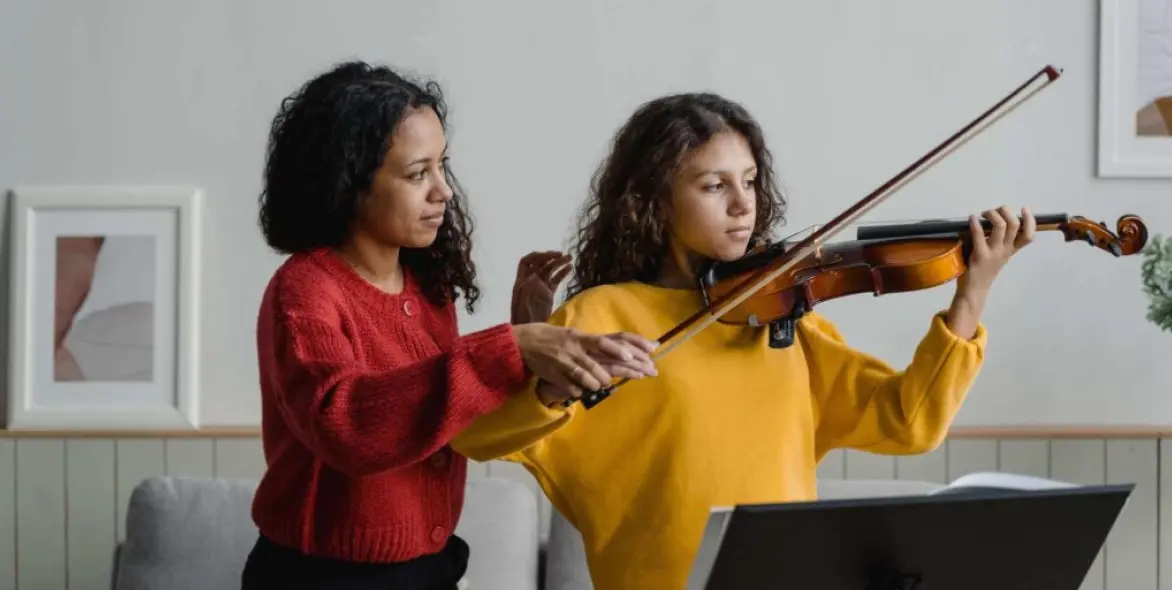
Why Does Posture Matter in Beginner Violin Technique?
Posture matters because it affects comfort, tone, endurance, and long-term progress. A relaxed setup helps beginners play with less tension and better control. Many beginners assume posture becomes important only after they start playing songs. In reality, posture shapes progress from the very first practice session. A balanced setup allows students to hold the violin comfortably, move the bow freely, and avoid unnecessary strain in the neck, shoulders, arms, and back. Good posture also creates a consistent playing position that teachers can refine over time. When posture is ignored, students may develop habits that make tone production, finger placement, and bow control more difficult later. Strong beginner posture supports endurance, confidence, and smoother technical growth. It is one of the first steps toward healthy violin playing.
How Should Beginners Hold the Violin Bow?
Beginners should hold the violin bow with relaxed, curved fingers, a flexible thumb, and a loose wrist. This allows smooth movement and better tone control.
The Beginner Bow Hold Explained
Bow hold is one of the most important skills in beginner violin technique. It directly affects tone, dynamics, articulation, and comfort. A stiff grip often creates scratchy sound or uneven movement, while a relaxed grip allows the bow to glide more naturally across the strings.
A proper beginner bow hold includes:
What Are the First Notes Beginners Learn on the Violin?
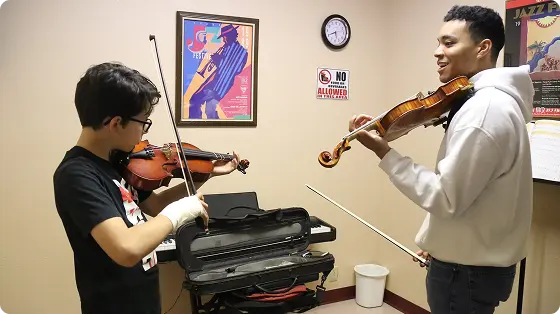
Starting with open strings
Open strings allow beginners to:
Develop clean bow strokes
Learn string names and directions
Build confidence with sound production
Introducing First Finger Notes
Why Does Learning at the Right Pace Matter?
Start learning today with 50% off your first lesson on the instrument of your choice!
Why Do Beginner Violin Students Need Guided Instruction?
Beginner violin students need guided instruction because early posture, bowing, and finger placement mistakes can become difficult to correct later. Feedback helps students build correctly from the start.
Preventing Bad Habits Early
The violin is precise and physically demanding. Without proper guidance, beginners may develop tension, poor bow grip, uneven posture, or inaccurate finger placement. These habits can limit tone quality and slow progress if they become ingrained.
Structured beginner guidance provides:
Building Confidence Through Consistency
Regular guidance helps beginners feel supported instead of uncertain. Students know what they are doing, why it matters, and how to improve. This reassurance keeps motivation high and makes early learning feel more manageable.
Learning violin in Montreal and the West Island
From first notes to musical confidence
Frequently Asked Questions
1. What is beginner violin technique?
2. Why is posture important for beginner violin students?
Posture helps students hold the violin comfortably, reduce tension, and move the bow freely. Good posture also supports clearer tone and stronger long-term progress.
3. How should beginners hold the violin bow?
Beginners should hold the bow with relaxed, curved fingers, a flexible thumb, and a loose wrist. This helps the bow move smoothly across the strings without harsh pressure.
4. What are open strings on the violin?
Open strings are notes played without pressing fingers on the fingerboard. Beginners use open strings to practise bow direction, rhythm, tone, and sound control before learning finger placement.
5. What first notes do beginners learn on violin?
6. Why should beginners learn violin at the right pace?
Learning at the right pace helps beginners avoid frustration and poor habits. When skills are introduced gradually, students build confidence, coordination, and stronger technique.
7. How does guided instruction help beginner violin students?
8. How long does it take to build beginner violin technique?
Beginner technique develops gradually with consistent practice and feedback. Some basics may improve within weeks, while stronger posture, bow control, and tone usually develop over months.