Do You Need a Guitar Teacher or Can You Learn on Your Own?

Learning guitar can happen in many ways, and one of the biggest questions beginners face is whether they need a teacher or can learn on their own. Self-learning gives flexibility, independence, and access to endless online resources, while working with a teacher provides structure, feedback, and correction. Both methods can work, but the best choice depends on the learner’s goals, discipline, experience level, and preferred learning style. Some students progress well independently, while others improve faster with guided support. Understanding the strengths and limits of each approach helps learners make a smarter decision. With the right method, guitar learning becomes more focused, enjoyable, and sustainable over time.
Can You Learn Guitar on Your Own Successfully?

Yes, guitar can be learned independently when learners follow a structured plan, practice consistently, and use reliable tools or resources. Self-learning has become more popular because guitar resources are now widely available through videos, apps, tabs, tutorials, and practice platforms. Learners can study at their own pace, repeat lessons, and explore styles that match their interests. This flexibility is helpful for motivated students who enjoy independence and can stay disciplined without regular supervision. However, self-learning works best when it follows a clear path rather than random content. Without structure, learners may skip fundamentals, repeat mistakes, or become stuck. The strongest independent learners use practice routines, recording tools, metronomes, and progress tracking to stay focused and improve steadily.

What Are the Best Ways to Learn Guitar With or Without a Teacher?

Personalized Live Guidance

Live guidance is useful because it gives learners direct correction and support. A teacher can observe posture, hand position, picking, rhythm, and timing in real time. This helps prevent mistakes from becoming long-term habits. Even learners who mostly practice independently can benefit from occasional feedback to check their technique and adjust their routine.

Step-By-Step Practice Plans

Successful guitar learning requires a clear progression. Learners should begin with open chords, simple rhythm, and basic coordination before moving into barre chords, scales, improvisation, and theory. A step-by-step plan prevents confusion and helps each new skill build naturally on the previous one.

Song-Driven Learning for Motivation

Songs keep guitar learning enjoyable and meaningful. Practicing with music that matches the learner’s taste helps connect technique to real playing. Chords, strumming, transitions, and rhythm become easier to understand when applied to songs the learner actually wants to play.

Weekly Practice Assignments

Weekly assignments create structure and accountability. Whether set by a teacher or created independently, practice goals help learners stay focused. Assignments may include chord drills, rhythm exercises, song sections, scale work, or recording short progress clips for review.

What Tools Help Self-Taught Guitar Learners Improve?

Self-taught guitar learners improve with tools like metronomes, tuners, chord libraries, backing tracks, video platforms, and recording apps.

Video Learning Platforms: Video platforms help learners watch demonstrations, slow down difficult parts, and review lessons multiple times. They are useful for understanding finger placement, rhythm patterns, and song breakdowns. However, learners should follow a structured playlist or course instead of jumping randomly between tutorials.

Digital Tuners and Metronomes: Tuners help keep the guitar sounding accurate, while metronomes build strong timing. These tools are essential for both beginners and advanced players because they support clean sound and rhythm control. Practicing slowly with a metronome can improve accuracy and consistency.

Chord and Scale Libraries: Chord and scale libraries give learners visual references for finger positions, progressions, and fretboard patterns. These tools are helpful when learning new songs or practicing theory. They also support independent study by making it easier to review shapes and positions.

Backing Tracks for Realistic Practice: Backing tracks help learners practice timing, rhythm, improvisation, and musical expression. They make practice feel closer to real playing because learners must stay in time with other instruments. This is especially useful for developing confidence before playing with others.

How Can a Teacher Personalize Guitar Learning?

A teacher personalizes guitar learning by adapting practice to the student’s goals, level, strengths, weaknesses, and musical interests. A major advantage of working with a teacher is personalized direction. Beginners may need help with basics such as holding the guitar, finger placement, strumming, and timing. Intermediate players may need support with tone, smoother transitions, and style development. Advanced learners may focus on improvisation, genre-specific techniques, theory, or performance preparation. A teacher can adjust the learning path based on what the student needs most. This prevents wasted time and makes progress feel more targeted. Self-taught learners can also personalize their path, but they must be more intentional about identifying weaknesses and choosing resources that directly support their goals.

Tips for Learning Guitar Effectively With or Without a Teacher

Create a Dedicated Practice Area

Choose a quiet, comfortable space where the guitar, tuner, notebook, and practice tools are always ready. A prepared setup makes consistency easier and reduces friction before practice begins.

Practice in Short, Focused Sessions

Short sessions of 20–30 minutes can be more effective than long, unfocused practice. Regular repetition builds muscle memory and helps learners improve without feeling overwhelmed.

Record Your Practice Sessions

Recording allows learners to hear mistakes and improvements more clearly. It helps identify timing issues, unclear notes, and progress that may not be obvious while playing.

Combine Technique, Theory, and Song Learning

Balanced practice creates better musicianship. Technique builds control, theory improves understanding, and songs make learning enjoyable. Combining all three keeps progress well-rounded.

Follow a Clear Practice Plan

A practice plan works like a roadmap. Whether created independently or with a teacher, it helps learners know what to practice next and prevents random, inconsistent sessions.

Use Helpful Tools Between Sessions

Chord diagrams, metronomes, backing tracks, rhythm trainers, and recording apps reinforce learning. These tools help learners stay engaged and confident between formal practice sessions.

Start learning today with 50% off your first lesson on the instrument of your choice!

Why Students in Montreal and West Island Choose Online Lessons

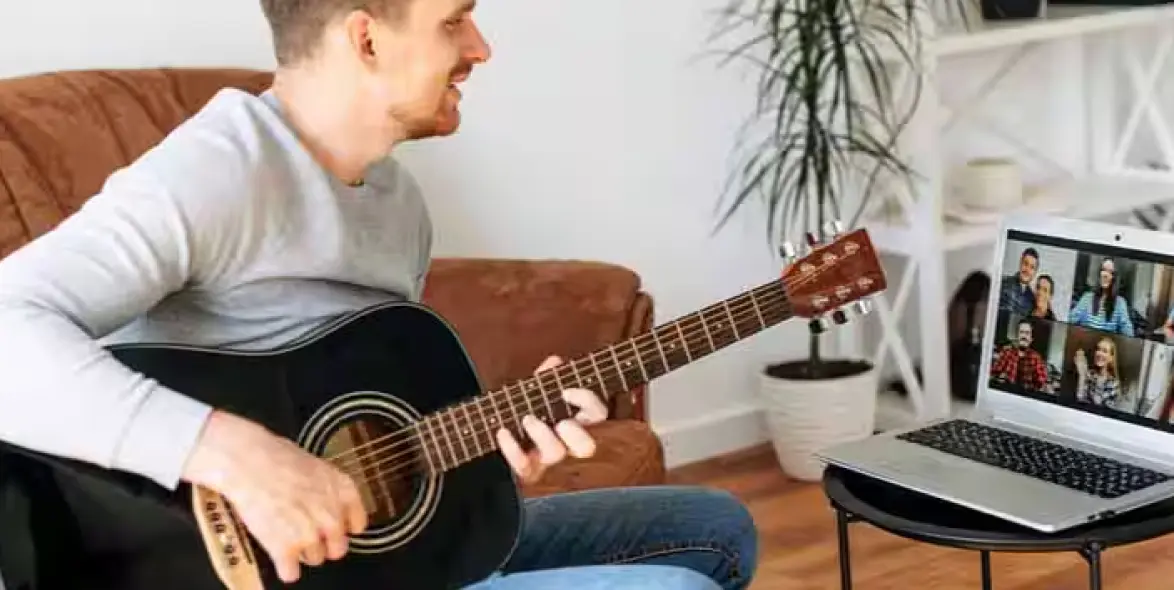
Virtual guitar programs offer an ideal blend of convenience and expert instruction. Many learners across Montreal—including those in Pointe-Claire, Côte Saint-Luc, Beaconsfield, and Saint-Laurent—prefer guitar lessons online because they eliminate travel time and offer flexible scheduling while maintaining high educational quality. Schools like WIMA provide online guitar programs designed to replicate the full in-studio experience, combining professional guitar teachers with structured curriculums and interactive tools. Students can progress at their own pace while still receiving consistent guidance from trained musicians. Online lessons also make guitar accessible to younger children, busy teens, professionals, and retired adults. Whether the goal is casual playing or advanced technique development, virtual learning allows students to build confidence on their own terms.

Online Guitar Lessons Offer a Complete Path to Musical Success

The evolution of guitar lessons online has opened an exciting chapter in music education. With skilled guitar teachers, smart tools, and customizable lesson plans, students can grow faster than ever—regardless of age, experience, or location. In Montreal and the West Island communities, guitar students now access expert instruction from home while enjoying a fully interactive musical journey. Whether you’re learning your first chords or working toward advanced performance goals, online guitar lessons deliver flexibility, structure, and inspiration. Your guitar journey can truly begin from anywhere. Pick up your instrument, connect with a great teacher, and step confidently into the world of virtual music learning.

Frequently Asked Questions

1. Can guitar be learned without a teacher?
Yes, guitar can be learned without a teacher when learners follow a structured plan, practice consistently, and use reliable tools like tutorials, metronomes, and chord libraries.
2. Is having a guitar teacher better than self-learning?
A guitar teacher can help learners progress faster by providing feedback, correcting mistakes, and creating a clear learning path. Self-learning works best for disciplined learners.
3. What are the benefits of learning guitar on your own?
Self-learning offers flexibility, independence, and control over pace. Learners can choose songs, resources, and practice times that match their goals.
4. When should someone consider getting a guitar teacher?
A teacher is helpful when progress feels slow, technique feels unclear, or bad habits are forming. Guidance can also help with timing, posture, and advanced skills.
5. What tools help self-taught guitar learners improve?
Useful tools include tuners, metronomes, chord charts, backing tracks, video lessons, recording apps, and structured practice plans.
6. Can beginners learn guitar on their own?
Yes, beginners can learn on their own by starting with basic chords, simple songs, rhythm practice, and short focused sessions. Structure is important for steady progress.
7. What is the best way to learn guitar effectively?
The best way is to combine structured practice, consistent repetition, feedback, and song-based learning. This helps build technique, confidence, and musical understanding.
8. Can learners combine self-learning with teacher support?
Yes, combining both methods often works well. Self-practice builds consistency, while teacher feedback helps correct mistakes and keep progress on track.