How to Improve Vocal Pitch, Power, and Performance Skills

Improving your singing voice requires more than repeating songs. Vocal pitch, power, and performance skills develop through focused exercises, healthy technique, and consistent singing lessons. Each area supports the others: accurate pitch creates musical clarity, controlled power strengthens expression, and performance skills help singers communicate confidently. Whether you are a beginner, an experienced performer, or someone returning to music, structured vocal training provides a clear path forward. Professional instruction helps singers understand how breathing, posture, resonance, and ear training influence the voice. This article explores practical ways to improve vocal accuracy, strength, and stage presence while answering an important question: can anyone learn to sing with proper guidance?
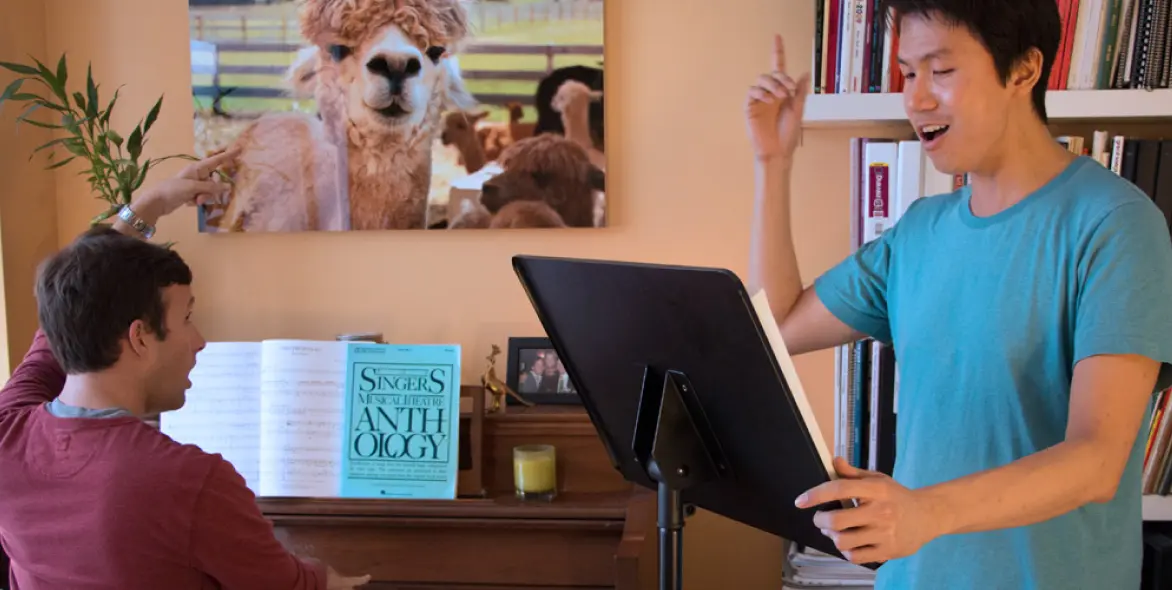
How Can You Improve Vocal Pitch Accuracy?

You can improve vocal pitch by strengthening your listening skills, coordinating your breath with your voice, and practising notes gradually. Regular singing lessons provide immediate feedback that helps correct inaccurate habits. Pitch accuracy depends on the connection between what a singer hears and what the voice produces. Students often sing off-key because they have not yet developed this coordination, rather than because they lack musical ability. Vocal instructors use scales, intervals, and pitch-matching activities to strengthen this connection. Consistent practice helps singers recognize whether a note is sharp, flat, or correct. As listening and vocal control improve together, singers become more accurate across melodies, harmonies, and different musical styles. This progress also increases confidence during rehearsals and performances.

Which Techniques Help Improve Pitch?

Singers can improve pitch through exercises that connect careful listening with controlled vocal production.

$
Vocal scales and interval exercises
$
Ear training and pitch recognition
$
Breath-supported note control
$
Slow melody and pitch-matching practice
As these techniques become familiar, singers learn to approach notes accurately instead of searching for them. Scales establish consistent vocal patterns, while interval exercises teach the distance between notes. Ear training helps students identify pitch differences, and breath control keeps notes stable after they are reached. These exercises are most effective when completed slowly and with professional feedback. A vocal coach can identify whether inaccurate notes result from insufficient airflow, tension, poor placement, or listening difficulties. Addressing the actual cause allows students to make steady, measurable progress.

How Do Singing Lessons Build Vocal Power?

Singing lessons build vocal power by developing efficient breath support, balanced resonance, and healthy projection. True vocal strength comes from coordination rather than forcing additional volume from the throat. Many singers mistake loudness for power and push their voices beyond a comfortable level. This creates tension, weakens tone, and may lead to vocal fatigue. Professional instruction teaches students to engage their breathing muscles, maintain steady airflow, and use resonating spaces effectively. Exercises involving sustained notes, controlled dynamics, and resonance help singers create fuller sound with less effort. Over time, the voice becomes stronger and more consistent throughout its range. Healthy vocal power allows singers to project clearly during performances while maintaining tone quality, flexibility, and endurance.

Technique, Expression, and Musical Style
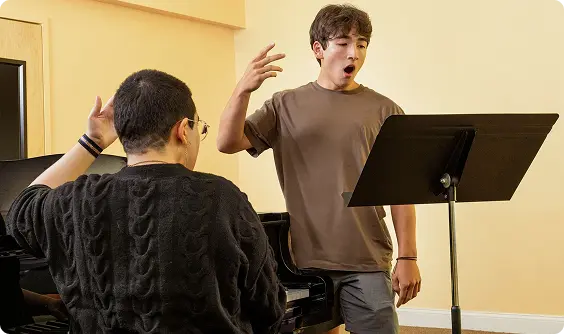
Improving vocal performance involves more than singing the correct notes. Memorable singers combine reliable technique with phrasing, dynamics, emotional expression, and an understanding of musical style. Quality singing lessons help students develop these artistic skills without sacrificing vocal control. Students learn how to shape phrases, emphasize meaningful lyrics, and vary intensity to communicate the emotion of a song. Breath control and healthy placement provide the stability needed to make these expressive choices confidently.
Music student posing with guitar at a West Island Music Academy event
Instructors also help students adapt their voices to different genres. Although pop, jazz, classical music, and musical theatre use different tonal qualities and performance conventions, each style depends on a strong technical foundation. This balance allows singers to sound expressive, authentic, and musically appropriate.

Styles Commonly Explored in Singing Lessons

Pop and contemporary music

Jazz and blues

Classical and musical theatre

Exploring different styles helps singers become more versatile while discovering the music that best suits their voices and interests. Pop and contemporary singing often focus on conversational phrasing and stylistic tone, while jazz and blues encourage rhythmic flexibility and personal interpretation.

Are Singing Lessons Effective for Kids, Teens, and Adults?

Yes, singing lessons can improve pitch, power, and confidence at any age because instruction can be adapted to the student’s voice, development, and personal goals. Children benefit from engaging exercises that develop pitch awareness, rhythm, and confidence. Teenagers may focus more on vocal identity, changing voices, auditions, and preferred musical styles. Adults often appreciate structured lessons connected to specific goals, including personal enjoyment, performance preparation, or returning to music after several years. The question can anyone learn to sing applies across every age group. The teaching approach may change, but the capacity to improve remains. Personalized instruction helps each student progress at an appropriate pace while protecting vocal health and keeping the learning experience productive, comfortable, and enjoyable.

Which Practice Strategies Support Vocal Growth?

Effective vocal practice should be consistent, focused, and short enough to prevent unnecessary fatigue. Singers do not need to practise for hours each day to improve their pitch, power, and performance skills. A teacher can create a routine that reinforces the techniques introduced during singing lessons. Regular practice strengthens coordination and helps healthy vocal habits become more automatic.

Structured practice helps singers:

$
Maintain vocal health
$
Strengthen muscle memory
$
Improve control gradually
A productive routine may include gentle warm-ups, breathing exercises, pitch patterns, resonance work, and focused song practice. Students should prioritize accuracy and comfort rather than volume or repetition alone. If the voice feels tired or strained, practice should stop. This sustainable approach supports steady improvement.

Why Do Learning Environment and Location Matter?

A supportive learning environment helps singers experiment with their voices, accept feedback, and make mistakes without feeling judged. Emotional comfort is particularly important because singing can feel highly personal. Students often hesitate to produce unfamiliar sounds or sing at full volume when they feel self-conscious. A patient instructor creates a constructive atmosphere where challenges become part of the learning process. This encourages singers to take creative risks and develop confidence gradually. Location also affects consistency. Convenient access to professional singing lessons makes regular attendance easier and supports long-term progress. Students throughout Montreal and the West Island, including Pointe-Claire, Côte Saint-Luc, Beaconsfield, and Saint-Laurent, benefit from having structured music education available near their communities.

Are In-Person or Online Singing Lessons More Effective?

Both in-person and online singing lessons can improve vocal skills when instruction is live, personalized, and provided by an experienced teacher. The most effective choice depends on the student’s needs and schedule. In-person lessons allow instructors to hear the natural voice directly and observe breathing, posture, jaw position, and physical tension closely. Students also benefit from practising in a dedicated musical environment. Online lessons offer flexibility and accessibility while still supporting pitch training, breath control, repertoire development, and performance preparation. Teachers can demonstrate exercises, provide immediate feedback, and adjust activities according to the student’s progress. The quality of instruction and consistency of attendance matter more than the format alone. Students should choose the option that helps them remain comfortable, engaged, and committed.

Start learning today with 50% off your first lesson on the instrument of your choice!

Learning to Sing at a Trusted Music School

Choosing a trusted music school provides students with structured training, experienced instructors, and a supportive environment for long-term vocal development. At West Island Music Academy, singing lessons help students improve pitch accuracy, vocal power, musical expression, and performance confidence through personalized instruction. Teachers assess each student’s current abilities, challenges, interests, and goals before selecting appropriate exercises and repertoire. This individual approach ensures that training addresses the singer’s specific needs rather than following a generic routine.
Students receive clear guidance on breath control, tone production, vocal health, and musical interpretation. Whether they are preparing for a performance or singing for personal enjoyment, learners develop practical skills that help them use their voices with greater freedom, consistency, and confidence.

Final Thoughts: Every Voice Can Improve

Singing is not limited to a select few. With the right singing lessons, nearly anyone can improve their voice, gain confidence, and enjoy musical expression. The question can anyone learn to sing is no longer debated—it is demonstrated daily through proper training. By focusing on technique, consistency, and supportive instruction, singers of all backgrounds can unlock their vocal potential. Whether your goal is performance, personal enjoyment, or vocal confidence, singing lessons provide the structure and encouragement needed to make lasting progress.

Frequently Asked Questions

1. Can anyone learn to sing with professional guidance?

Yes, nearly anyone can improve their singing through proper technique, ear training, and consistent practice. Professional singing lessons help students develop control, accuracy, and confidence.

2. How can singing lessons improve vocal pitch?
Singing lessons use scales, interval exercises, pitch matching, and ear training to connect what students hear with the notes they produce. Regular feedback helps correct pitch problems effectively.
3. What exercises help develop a more powerful voice?
Breathing exercises, sustained notes, resonance drills, and controlled dynamic practice help develop vocal power. Singers should focus on efficient airflow instead of forcing volume from the throat.
4. How long does it take to improve singing skills?
Most students notice initial improvements within a few weeks of regular lessons and practice. Developing lasting pitch accuracy, vocal strength, and performance confidence usually requires several months of consistent training.
5. How do singers improve their performance confidence?
Singers build confidence by strengthening technique, rehearsing complete songs, recording themselves, and performing regularly. Preparation helps them manage nerves and recover calmly from mistakes.
6. Are singing lessons suitable for kids, teens, and adults?
Yes, singing lessons are effective for every age group. Instructors adapt exercises, repertoire, and teaching methods to each student’s age, vocal development, musical interests, and goals.
7. Should I choose in-person or online singing lessons?

Both formats can be effective when lessons are live and personalized. In-person lessons provide direct acoustic and physical feedback, while online instruction offers greater convenience and accessibility.

8. How often should singers practise to see improvement?

Singers should practise consistently through short, focused sessions several times per week. Regular practice supports vocal health, strengthens muscle memory, and improves pitch and control without overworking the voice.