
What Beginners Should Know Before Learning Piano
Starting piano for the first time is an exciting step into music, creativity, and personal growth. Beginners often wonder what they need to know, how to prepare, and whether they need previous musical experience. The good news is that learning piano begins with simple, manageable steps. Students usually start by understanding the keyboard, building posture, learning hand position, practicing rhythm, and playing basic notes or patterns. The goal is not perfection in the beginning; it is comfort, confidence, and curiosity. With a clear mindset and steady guidance, beginners can build strong musical habits from the start. Knowing what to expect makes the first stage less stressful and more enjoyable.

What Should Beginners Expect Before Learning Piano?
Beginners should expect to start with simple goals, keyboard basics, posture, hand position, rhythm, and easy notes or patterns. Before learning piano, beginners should understand that the first stage is designed to feel welcoming and manageable. A learner may begin by discussing musical goals, such as playing classical pieces, pop songs, jazz, movie themes, or music for personal enjoyment. This helps shape the learning path around personal interests. Next, beginners explore how the keyboard works, where notes are located, and how black and white key patterns repeat. Basic sitting posture, hand shape, and touch are also introduced early. Even complete beginners can usually begin playing a short melody or pattern quickly. The aim is confidence, not perfection, so every step builds comfort with the instrument.
How Should Beginners Prepare Before Learning Piano?
Why Is Guidance Important for Beginner Piano Learners?
How Does the Learning Space Affect Beginner Piano Progress?
What First Skills Should Beginners Learn on Piano?
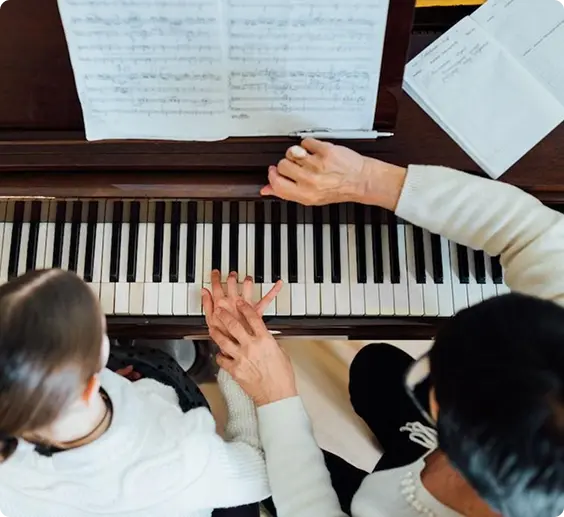
Every beginner starts by learning the geography of the piano. Students learn how notes repeat and how to locate important reference points like middle C.
2. Posture & Technique
Beginners learn how to sit correctly, use relaxed wrists, and keep fingers curved for better control. These habits support comfort and smoother playing.
3. Basic Rhythms
Clapping patterns, counting aloud, and simple exercises help learners understand timing. Rhythm is a core skill that supports every future piece.
4. Reading Music
Beginners gradually learn written notes, symbols, and patterns. This makes it easier to understand songs and practice more independently.
5. Playing Your First Song
Most beginners can play a short melody early in the learning process. This first achievement encourages consistency and confidence.
How Can Beginners Make Faster Progress on Piano?
Beginners make faster progress by practicing consistently, using short routines, reviewing previous material, and focusing on slow, careful improvement.
Practice Habits That Help Beginners Improve
Start learning today with 50% off your first lesson on the instrument of your choice!
Why Does the First Stage of Piano Learning Matter?
Frequently Asked Questions
1. What should beginners know before learning piano?
Beginners should know that piano learning starts with simple steps like keyboard layout, posture, rhythm, note reading, and easy melodies.
2. Is previous music experience needed before learning piano?
No, previous music experience is not required. Beginners can start from the basics and build skills gradually with clear guidance and regular practice.
3. How should beginners prepare before learning piano?
Beginners can prepare by setting simple goals, keeping a notebook, checking their piano or keyboard, and staying open to learning step by step.
4. What are the first skills beginners learn on piano?
The first skills usually include keyboard layout, middle C, posture, finger placement, basic rhythm, simple note reading, and short melodies.
5. Why is posture important when learning piano?
Posture helps beginners play comfortably and avoid tension. Good sitting position, relaxed wrists, and curved fingers support smoother piano playing.
6. How can beginners make faster progress on piano?
Beginners can progress faster by practicing consistently, using short warm-ups, reviewing previous material, and focusing on slow, careful improvement.
7. How long should beginners practice piano each day?
Beginners can start with 10–20 minutes of focused practice each day. Short, consistent practice is usually better than long, irregular sessions.
8. Why does the first stage of piano learning matter?
The first stage builds confidence, healthy habits, rhythm awareness, and basic technique. These foundations support long-term piano progress.