Who Should Learn Drums? Kids vs Adults Guide

Learning drums is an exciting journey, but many people wonder whether it is better suited for kids or adults. The truth is that drumming can be learned at any age, but the experience differs depending on learning style, goals, and personal motivation. Children often respond naturally to rhythm and movement, while adults bring focus, discipline, and structured thinking to the learning process. Understanding these differences helps set realistic expectations and allows learners to approach drumming in a way that suits them best. Whether starting early or later in life, both kids and adults can develop strong rhythm, coordination, and confidence through consistent practice. This guide explains who should learn drums and how each age group benefits from the experience.

What Skills Do Drummers Develop at Any Age?

Drumming builds a wide range of skills that apply to both kids and adults, regardless of when they start learning. At the core, drummers develop rhythm, coordination, and timing, which are essential for playing music effectively. In addition to technical skills, drumming improves listening ability, focus, and physical awareness. Learners gradually understand how different rhythms work together and how to maintain consistent tempo. These skills are developed through structured practice and repetition, allowing both children and adults to improve steadily over time. While the pace of learning may vary between age groups, the core skills remain the same. This makes drumming a flexible instrument that adapts to different learners while still delivering meaningful progress.

Core Skills Developed in Drumming

$

Proper stick grip and posture

$

Basic rhythm counting and timing

$
Understanding drum kit coordination

Why Rhythm Is the Foundation of Drumming
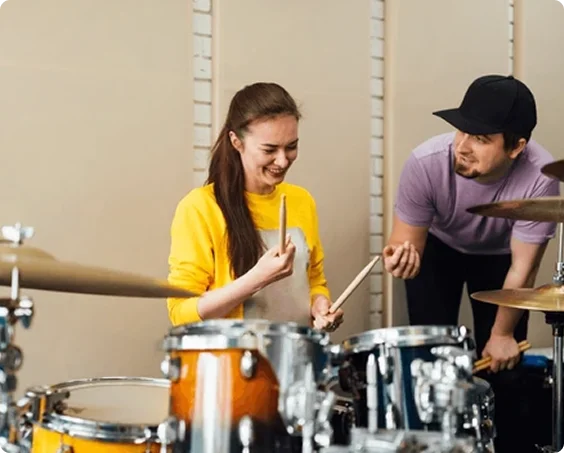
Rhythm is the foundation of drumming because it connects timing, coordination, and musical structure. Unlike melodic instruments, drums are all about rhythm. Beginner drum lessons teach students how to feel time, count beats, and play consistently with a steady tempo. This ability is essential not only for drummers but for any musician working with others. In structured drum classes, rhythm is taught through simple exercises that gradually become more complex. Students learn to play quarter notes, eighth notes, and basic grooves while developing independence between hands and feet.

How Rhythm Training Improves Musical Skills

Strengthens timing and coordination

Builds listening and ensemble awareness

Creates a strong musical foundation

These rhythmic skills transfer easily to other instruments and help students become well-rounded musicians.

How Technique Development Varies by Age

Technique plays an important role in drumming, but the way it is learned can differ between kids and adults. Younger learners often develop technique gradually through repetition and guided exercises, focusing on comfort and natural movement. Adults tend to focus more on understanding the mechanics behind technique, which helps them correct mistakes more quickly. Proper posture, grip, and controlled movement are essential for both groups, as they prevent strain and improve sound quality. While kids may take longer to refine technique, they often develop strong habits over time. Adults may progress faster initially but must remain consistent to maintain improvement. In both cases, proper technique supports long-term growth and helps drummers play more efficiently and confidently.

Kids vs Adults: Who Should Learn Drums?

Drums can be learned by anyone, but the experience differs depending on age and personal goals. Kids often benefit from early exposure, as it helps develop coordination, focus, and creativity from a young age. Teens typically enjoy exploring styles and expressing individuality through music. Adults, on the other hand, often approach drumming with specific goals such as stress relief, skill development, or playing in a band. Each group has its own advantages, and no age is better than another for starting. The key is choosing a learning approach that matches the individual’s motivation and lifestyle. Understanding these differences helps learners make informed decisions and enjoy the process more fully.

Practice, Progress, and Consistency

Progress in drum lessons depends on consistency more than speed. Short, regular practice sessions reinforce what is learned in class and help students build muscle memory. In structured drum classes, teachers guide students on how to practice effectively at home. Beginners learn simple routines that focus on timing and coordination rather than long, exhausting sessions. Regular practice leads to visible improvement, which builds confidence and keeps students excited about learning.

Choosing the Right Drum Classes in Montreal

Location and learning environment play a major role in consistency. Students are more likely to attend regularly when drum lessons are convenient and well-organized. For families and learners in Montreal and the West Island, access to professional instruction close to home matters. Areas such as Pointe-Claire, Côte Saint-Luc, Beaconsfield, and Saint-Laurent benefit from having structured drum programs that support long-term learning without excessive travel. A well-equipped studio, quality instruments, and a calm learning atmosphere allow students to focus fully on their drum classes and enjoy the process.

Start learning today with 50% off your first lesson on the instrument of your choice!

Why Structure Is Important for All Learners

Structure is essential for effective learning, regardless of whether the student is a child or an adult. Without structure, practice can become inconsistent and progress may slow down. A clear learning path helps break down complex skills into manageable steps, making drumming easier to understand and improve. Both kids and adults benefit from having defined goals, regular feedback, and a steady progression of skills. Structure also helps prevent bad habits and ensures that technique, rhythm, and coordination are developed properly. By following a structured approach, learners can stay motivated and see consistent improvement over time, making the learning process more enjoyable and productive.

Learning Drums at a Trusted Music School

Choosing the right environment is just as important as choosing the instrument. At West Island Music Academy, beginner drum lessons are designed to build confidence, coordination, and musical understanding from the very first class. With structured drum classes, experienced instructors, and a supportive learning atmosphere, students receive the guidance they need to enjoy learning while progressing steadily.

Final Thoughts: Start Strong with Drum Lessons

Drumming is one of the most rewarding ways to experience music. With the right drum lessons, beginners learn rhythm, technique, and their first beats in a way that feels achievable and exciting. By choosing structured drum classes, students gain more than just technical skills. They develop discipline, confidence, and a deep connection to music. Whether for a child or an adult beginner, starting with the right foundation ensures that every beat played is a step forward.

Frequently Asked Questions

1. Who should learn drums, kids or adults?
Both kids and adults can successfully learn drums, as the instrument adapts to different learning styles. Kids benefit from natural rhythm, while adults progress through focus and structured practice.
2. Is it easier for kids or adults to learn drums?
Drums can be easier for kids because of their natural energy and rhythm, but adults often learn faster due to discipline and understanding. Each age group has different advantages.
3. What age is best to start learning drums?
There is no perfect age to start learning drums. Children can begin as early as 5–7 years old, while adults can start at any age and still achieve strong results.
4. Can adults learn drums as effectively as kids?
Yes, adults can learn drums effectively with consistent practice and proper guidance. Their ability to focus and follow structure often helps them progress steadily.
5. What benefits do kids get from learning drums?
Kids improve coordination, focus, listening skills, and confidence through drumming. It also provides a healthy outlet for energy and encourages creativity.
6. What benefits do adults get from learning drums?
Adults benefit from stress relief, improved concentration, and a sense of achievement. Drumming also helps develop coordination and mental focus.
7. Do kids and adults need different learning approaches?
Yes, kids learn better through interactive and engaging exercises, while adults prefer structured and goal-oriented practice. Adapting the approach improves results for both.
8. How long does it take for kids or adults to learn drums?
Both kids and adults can learn basic rhythms within a few weeks. Long-term improvement depends on consistent practice and gradual skill development.